
ILM's 50th Anniversary Panel at Annecy Proves the Studio's Best Storytelling Is Still Ahead


Industrial Light & Magic brought its 50-year legacy to the Annecy International Animation Film Festival this week, celebrating the studio's history of innovation in character animation while offering the next generation of artists a candid look at how to build a career in the industry. The session opened with a keynote from Rob Coleman, Creative Director of ILM Sydney, who traced the arc of the studio's animation work through his own personal journey, beginning with the wonder he felt as a child in Canada watching Dick Van Dyke dance with animated penguins in Mary Poppins, and following him through decades of groundbreaking work on some of the most iconic characters in cinema history.
Coleman grounded his talk in a pair of guiding philosophies. The first came from legendary animation director Chuck Jones: "We want our characters to be alive." The second came from Frank Thomas and Ollie Johnston, two of Walt Disney's "Nine Old Men,” whose 1981 book The Illusion of Life: Disney Animation argued that the animator's true task is not to animate drawings, but to animate feelings, creating the illusion of thought in a character so convincing that the audience believes it is genuinely alive.
Coleman walked the audience through ILM's foundational milestones, from the studio's origins in Van Nuys, California, in 1975, through the early go-motion techniques developed by Phil Tippett for the AT-AT walkers in The Empire Strikes Back, a technique that added natural motion blur to stop-motion puppetry by using computer-controlled motors to move models during a frame's exposure.
The first true inflection point came in 1985 with the Stained Glass Knight in Young Sherlock Holmes, the first fully CG character to appear in a live-action film. That was followed by the water pseudopod in The Abyss (1989), the liquid metal T-1000 in Terminator 2 (1991), and then the seismic achievement of Jurassic Park in 1993, which Coleman credited as the film that changed his life and drove him to apply to ILM immediately after seeing it. He was hired that October.
A pivotal moment in Coleman's own development came in 1996, when ILM sent him to Richard Williams's animation masterclass in San Francisco, even though he was already an animation supervisor at the studio. He described the experience as humbling in the extreme. "I walked away from masterclass feeling that I knew almost nothing about character animation," Coleman said. That realization, rather than discouraging him, reinforced what became his core philosophy: to excel in this industry, you must be a lifelong student and a keen observer of life.
Coleman and Williams developed a friendship over the years, and Coleman credits Williams as a vital link to the classic Disney and Warner Bros. masters, giving him, in his words, one degree of separation from animators like Milt Kahl and Ken Harris. He still considers Williams's The Animator's Survival Kit the definitive bible for animators.
Coleman's time as Animation Director on the Star Wars prequels produced some of the most detailed case studies in the talk. When pitching George Lucas on a fully digital Yoda for Attack of the Clones, Coleman's team had to solve a counterintuitive problem: early tests made Yoda move too smoothly, resulting in what Coleman called "a creepy little green guy" rather than the beloved character audiences knew. The solution was to consciously limit the freedom of CG to animate what he called "performance dirt" back into the digital model. Meeting with Frank Oz, the original Yoda puppeteer, Coleman learned exactly how Oz's fingers were positioned inside the puppet's head, and realized that the natural shakes, wiggles, and physical jars of holding a heavy puppet for hours were essential to the character's soul. Even Yoda's ear wiggles were faithfully recreated in the digital version.
The proof-of-concept reel Coleman's team secretly prepared for Lucas included three speaking shots and three non-speaking shots, specifically to demonstrate they could carry Yoda's soul without dialogue. When Lucas approved the project, he eventually awarded the team a purely non-verbal close-up, a reaction shot of Yoda casting a distrustful glance over his shoulder as he leaves Palpatine's office. The Animator's work on that single shot was so effective that Lucas used a still from it on the film's poster.
Coleman also highlighted recent work, including Transformers One, directed by Josh Cooley, which placed an emphasis entirely on emotional, nonverbal storytelling between Orion Pax and D-16. He walked through the full creative process of one shot animated by Mariah Tomman, showing her blocking pass, spline pass, and final render to illustrate how ILM animators develop a performance through iterative director reviews.
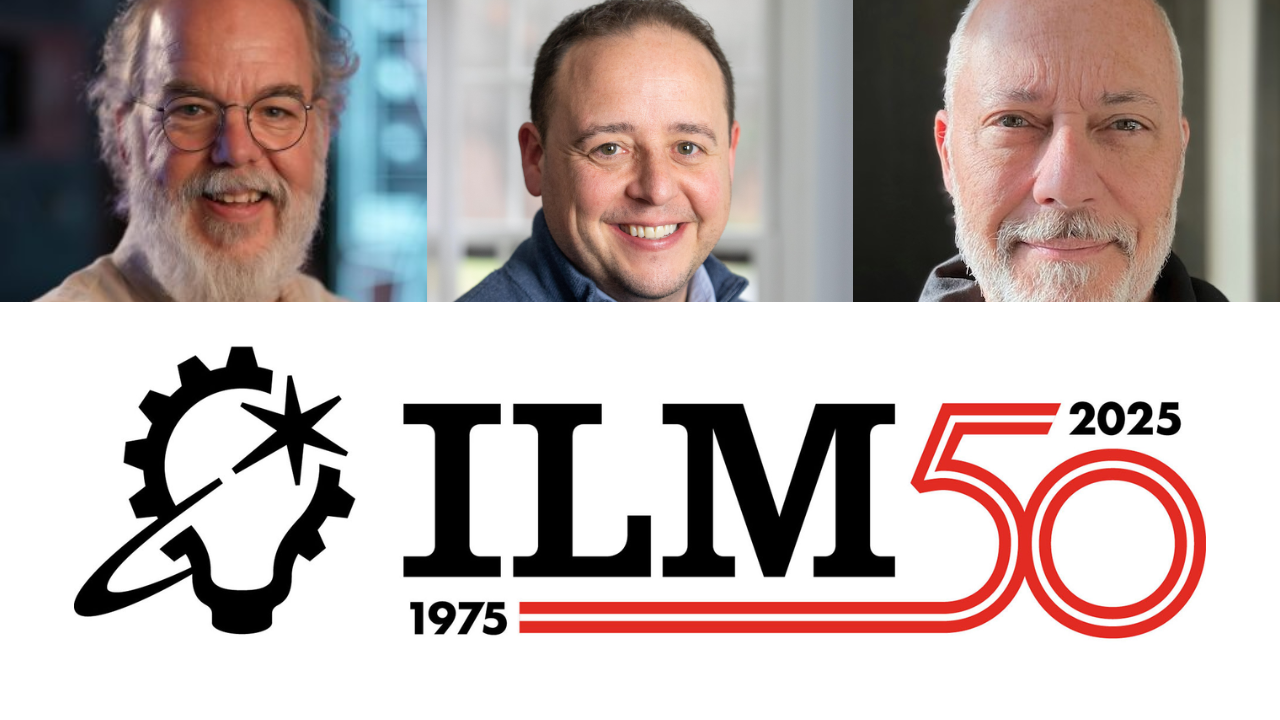
The session then expanded into a fireside panel with senior producer Sean Murphy and senior animation supervisor Hal Hickel, facilitated by Leanne Loughran, ILM's Senior Manager of Talent Acquisition.
Hickel emphasized the timeless importance of studying acting, studying film, and understanding the relationship between a performer and the camera as skills that remain essential regardless of which software or technology is currently in use.
Murphy spoke to career resilience, drawing on his experience at Blue Sky Studios during the Disney acquisition period. He credited two anchors for getting through industry turbulence: the work itself and the people around you. He specifically mentioned Nimona, the Blue Sky film that was famously halted when Disney closed the studio in 2021, before being completed and released by Netflix in 2023, as an example of how passion for a project can be a powerful motivator even in uncertain times. "We loved Nimona. We were like, we have to get it on the screen," Murphy said.
On what ILM looks for in a reel and a candidate, Coleman noted that the software is secondary and that what matters is demonstrating genuine passion, expressiveness, and a deep engagement with the craft. Murphy added that a blog or personal presence can help tell the story of who an applicant is beyond the reel itself.
Hickel offered a piece of advice for animators with supervisory ambitions: don't assume your manager knows you want to move up. "You gotta tell people," he said. "They're not going to know it psychically."
He also shared a practice he's adopted from director Jon Favreau on The Mandalorian, leading dailies with "feelings first," evaluating how a sequence makes the viewer feel and how it functions within the larger film before diving into technical notes. It's an approach he's worked to carry into his own reviews at ILM.
Murphy closed the panel with a pair of announcements for ILM's animated feature slate, both in partnership with Warner Bros.: an adaptation of Dr. Seuss's Oh, the Places You'll Go!, being developed across ILM's Sydney and Vancouver studios; and The Lunar Chronicles, based on Marissa Meyer's novel series, primarily being produced at ILM London. Both projects are currently in active development, and ILM is hiring across all locations.
When each panelist was asked to offer the next generation of artists a single word of advice, Coleman said passion, Hickel offered curiosity, and Murphy landed on nimble. three words that, taken together, feel like a fitting shorthand for the studio itself. Fifty years after a group of gearheads and artists assembled in a Van Nuys warehouse to build a galaxy far, far away, ILM's next chapter is being shaped by people who still lead with feeling, stay hungry to learn, and adapt without losing sight of what has always mattered most: making audiences believe that the characters on screen are truly alive.