
Asad Ayaz Discusses Disney's Inclusive Approach to Creative Partnerships


The Walt Disney Company’s Chief Marketing and Brand Officer Asad Ayaz used the inaugural Created in LA gathering to make a direct appeal to more than 350 creators assembled on The Walt Disney Studios lot. Despite Asad’s long history with the company, this was the first time I had heard him speak, and his impressive perspective showed his insightful view of how Disney and creators can work together to create and support Disney storytelling. Despite his nuanced views, his overall message was clear: he wants Disney to have more conversations with creators to learn what creators' audiences care about and explore what the two sides might build together.
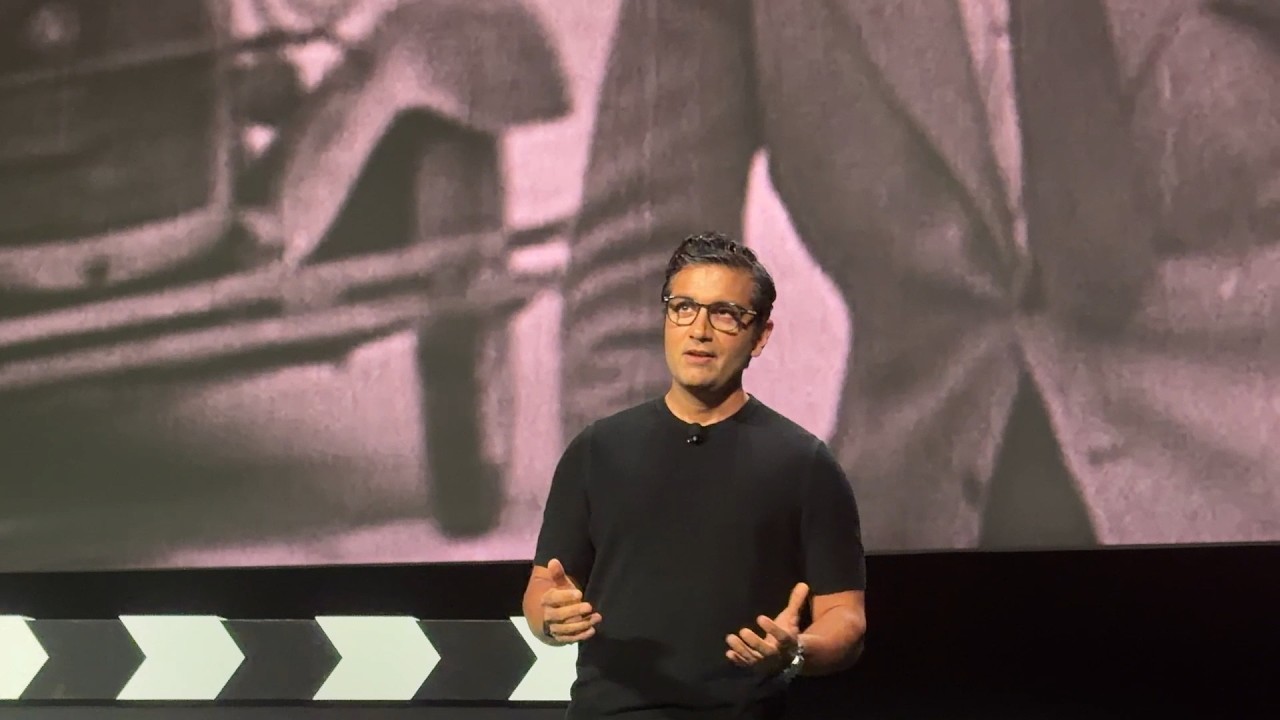
Inside the historic Walt Disney Studios Main Theater, Ayaz posited that the creator economy is not separate from Disney's history. In his telling, it is a continuation of it. Ayaz began with Walt Disney, describing him first and foremost as a storyteller whose ideas moved from drawings to animated shorts, feature films, consumer products, television and ultimately physical places where audiences could enter those stories. What distinguished Walt, Ayaz said, was a willingness to attempt things that had not been done before, accept the risk of failure and continue learning. That history gave Ayaz a framework for the day. Disney's opportunity, he said, is to meet contemporary creators with the same openness and willingness to take creative chances.
That comparison also underscored how Disney views the modern media landscape. A story no longer needs to remain within the format in which it began. A character can move from a screen into a video game, a film can inspire merchandise or a theme park land, and a major sports moment can unite athletes, entertainers and fans. While Disney fans are familiar with this “One Disney” approach, famously illustrated in the 1957 org chart and constantly being readvocated by current Disney CEO Josh D’Amaro, it was an important point for Ayaz to make to the general creator community. Each part of Disney provides another entrance into a story, and Disney has an unusually broad collection of worlds and platforms on which those stories can live. Perhaps fittingly, this was a message that was reiterated throughout the day regarding the creators' own brands. Commit to your brand and identity while trying to find new ways to engage with your community while staying authentic to yourself. This could be new channels, products, or in-person experiences. More simply, creators should create their own Disney-style flywheel.
Turning back to how Disney and creators can reinforce each other’s flywheels, Ayaz mentioned that creator content featuring Disney and its franchises has generated more than 52 billion views this year. Despite that success, he believes the larger opportunity lies in bringing creators into the process earlier. That means listening to what their communities respond to and allowing that knowledge to help shape ideas, rather than treating a creator relationship as a promotional step at the end of production.
Ayaz outlined three ways those relationships might begin. A creator could bring Disney an original story, apply a distinct perspective to a Disney story, or take on a role in front of or behind the camera. Those paths were broad by design. The creators in the room had built different types of communities, and Ayaz made clear that Disney was not proposing a single formula for moving from digital platforms into the company's larger entertainment ecosystem.
For original ideas, Ayaz pointed to creator Lala Sadii, who is extending the personal storytelling that built her online following into Lala IRL, a scripted project in development for Disney Channel and Disney+ that she is set to star in and executive produce. He also cited 99 Nights in the Forest, the Roblox hit from Grandma's Favourite Games that is now being developed as a film by 20th Century Studios. A third example, Hulu's The Secret Lives of Mormon Wives, grew from a group of women sharing their lives and building a community online into an Emmy-nominated unscripted series and one of the streamer's largest reality franchises.
Although the projects differ in format and tone, Ayaz identified a common principle: preserve what made an idea connect with its original audience, then consider where else it can go. The goal is not to strip away the qualities that made a creator distinctive in order to fit an established Hollywood model. It is to find a larger form for the same creative spark.
The second form of partnership is to begin with a Disney story or event. Ayaz pointed to D23: The Ultimate Disney Fan Event, held the previous month, where more than 80,000 fans and hundreds of creators gathered. Content connected to the event generated more than 3 billion views over the weekend, according to Ayaz, but the more revealing result was the range of interpretations. Creators approached the same event in different ways, giving millions of people new points of entry into the worlds of Disney. Another example, although not an official partnership, was last night’s premiere of an Empire Strikes Back parody made of cardboard.
For Ayaz, that active reinterpretation is central to fandom. Fans do more than watch a story and move on. They discuss it, respond to it and invite other people into the conversation. Creators understand the language and expectations of their own communities, while Disney can supply access to stories, talent and major cultural moments. Ayaz described Disney's role as creating that access and then leaving enough room for creators to work in their own voices.
He connected that approach to Disney's recently announced TikTok partnership, which is intended to give creators access to Disney brands and create opportunities for selected work to appear not only on TikTok but also on Disney+. A related creator ambassador program is expected to offer visibility, exclusive-event access, rewards and professional-development opportunities. The partnership gives Disney a formal structure for the kind of relationship Ayaz described throughout the speech, but he made clear that the company's ambitions extend beyond any one platform.
The upcoming calendar provides many possible points of collaboration. Ayaz mentioned the global rollout of Avengers: Doomsday, Star Wars Celebration in April, D23 Asia in June, and new experiences across Disney's theme parks and cruise ships. He also noted that Disney will have the Super Bowl, the Grammys and the Oscars next year, providing massive live events for the communities to engage in.
Ayaz’s third form of collaboration is to build a relationship that may lead to more conventional entertainment roles. he said creators could work as actors or hosts in front of the camera, or as writers, directors, producers and other creative contributors behind it. Perhaps this approach has been most utilized by ESPN who has actively brought in sports creators as hosts, commentators, and leaders.
As Ayaz pointed out, entertainment is a relationship business. None of the three forms of collaboration come without getting to know each other first. And that is why Disney partnered with Jon Youshaei to support the launch of Created in LA. Disney is showing a commitment to their interest in outreach with creators, similar to how the show outreach to Disney fans through D23. In both instances, the goal is to have a two-way dialogue about storytelling, partnership, and a dose of magic. Based on the reaction I heard from the creators in attendance, things are off to a great start.