ESPN Edge Through the Eyes of a Disney Innovation Enthusiast


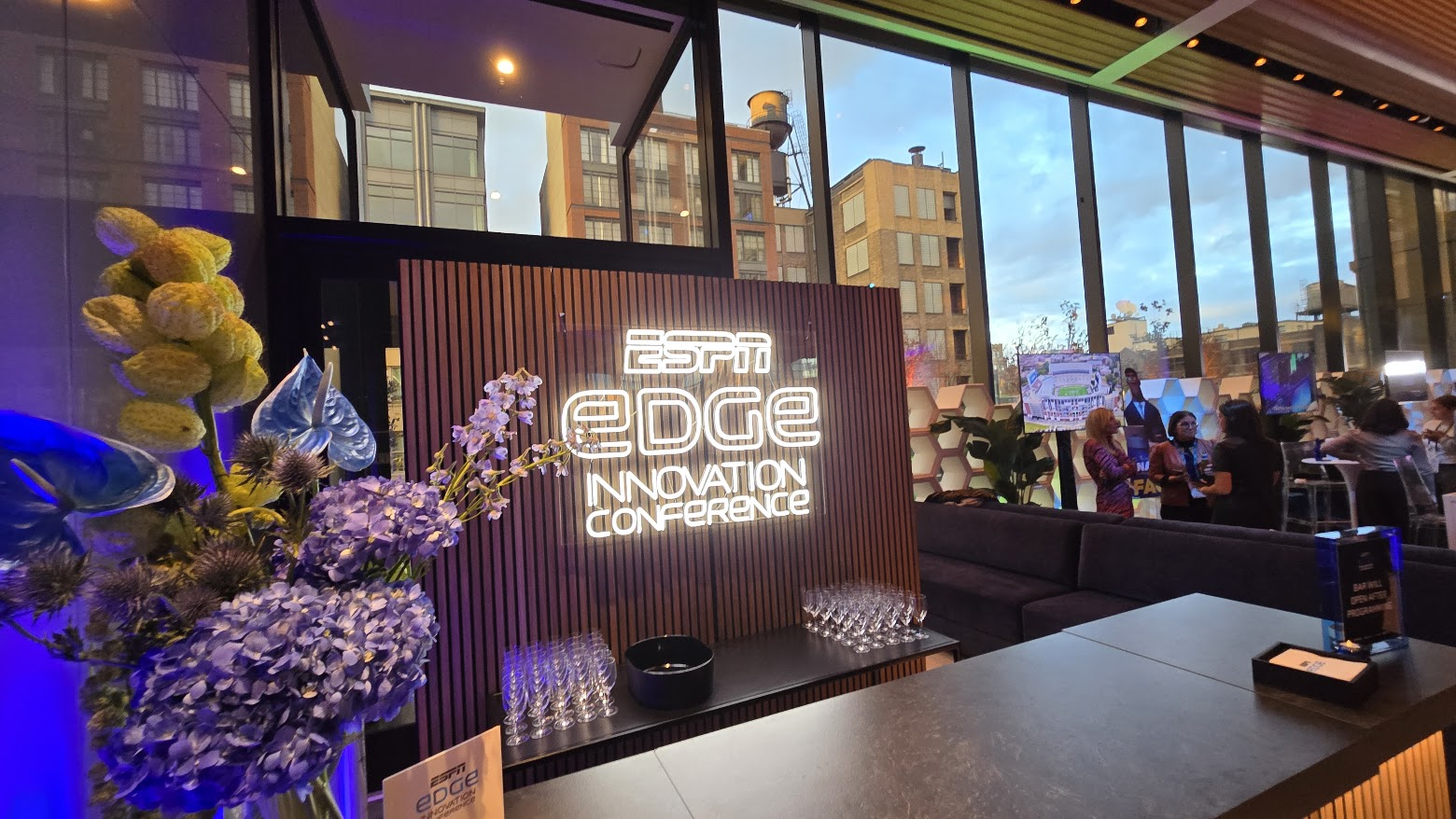
The 5th annual ESPN Edge Innovation Conference took place in The Walt Disney Company’s headquarters in New York City at 7 Hudson Square. Originally launched as a virtual conference, the annual event now consistently unites the leading minds driving technological innovation, featuring panels, live demonstrations of emerging technologies, and valuable networking opportunities.
What struck me most during the ESPN Edge experience was how seamlessly it reflected a core philosophy I’ve long admired within The Walt Disney Company that technological innovations are a storytelling tool. They are not a gimmick, but rather a tool that enables stronger connections between a story and its audience.
Innovation as Storytelling: The Disney Philosophy at ESPN Edge
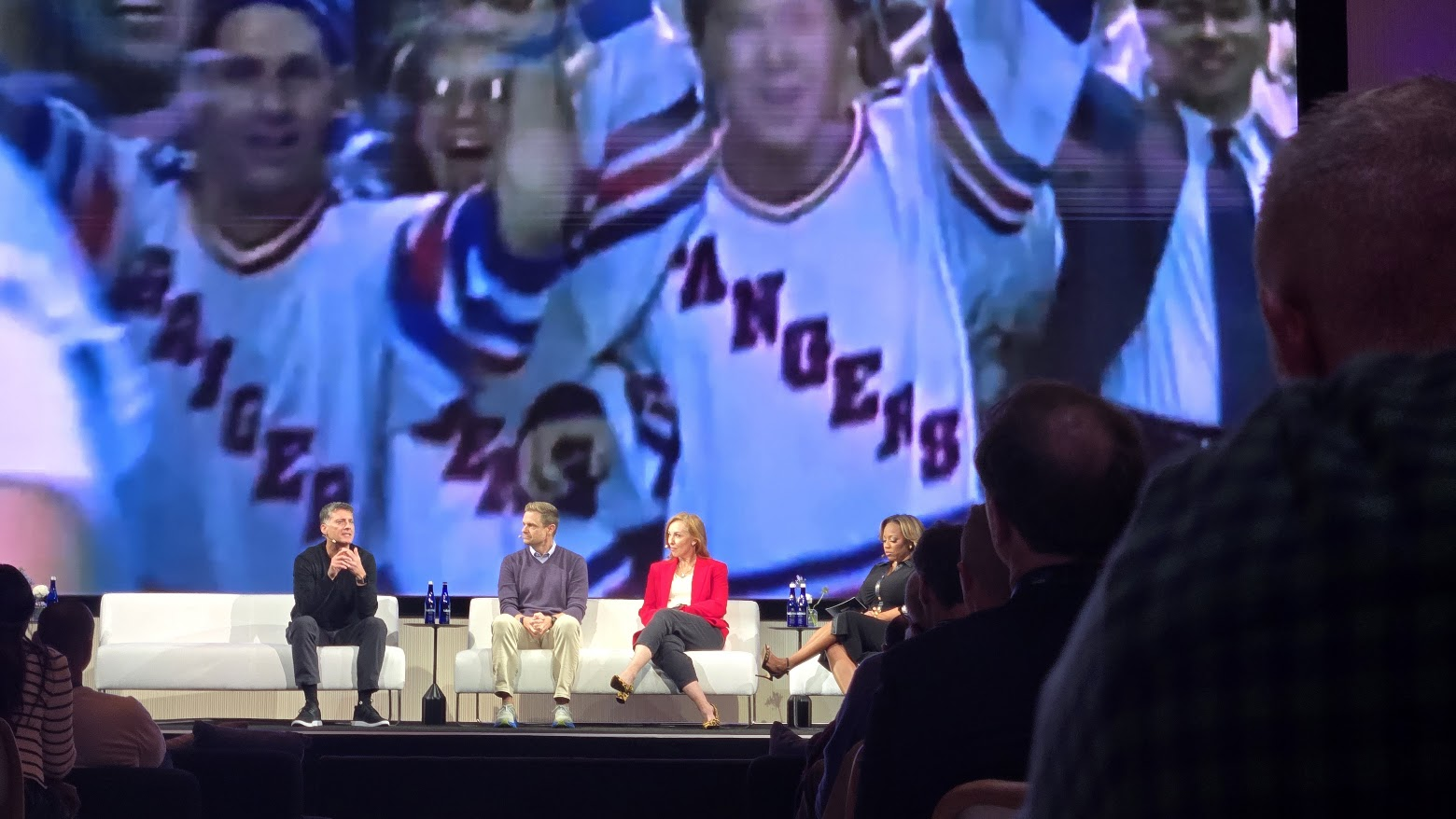
The opening panel set the tone, guided by moderator and ESPN reporter Monica McNutt, who welcomed Rosalyn Durant, Executive Vice President of Programming & Acquisitions, and Kevin Lopes, Vice President of Sports Business Development. Early in the conversation, McNutt posed a simple question to whet the audience's appetite for the panels ahead: What are you most excited to hear about tonight?
Kevin Lopes responded with ESPN’s emerging work with animated alt-casts, which was also what had popped out to me. He described the collaborations between ESPN and the NHL to create a fully animated broadcast inside the world of Big City Greens. They did more than just transform player and puck tracking into real-time animation. There was lore. The broadcast didn’t merely mirror the game; rather, it extended it, allowing hockey to live and breathe inside a completely different storytelling universe
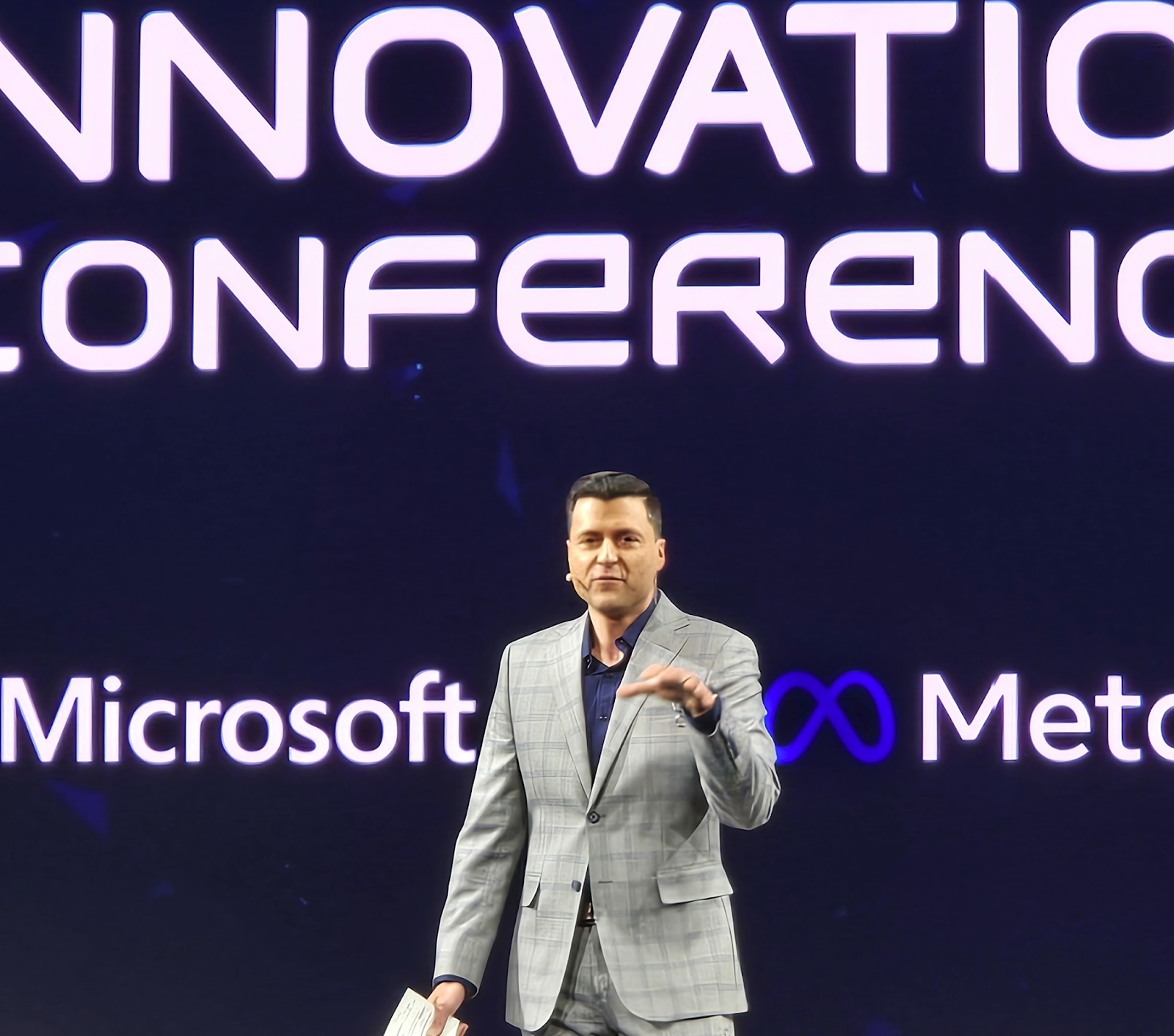
Following this panel, Edge host and ESPN personality Arda Öcal, would talk about his participation in the project. As a sportscaster host during the animated hockey broadcast, Öcal wore VR goggles that fully immersed him in the animated world to offer commentary from inside the experience. It was sports fused with imagination, and not as a gimmick, but as a way to welcome new viewers, especially families, into the magic of the game.
McNutt lit up when describing her experience hosting Dunk the Halls, an NBA Christmas Day animated special featuring Mickey and Friends standing in for NBA players. According to her, the response was immediate and overwhelming. Numerous friends texted excited messages of their family creating a holiday memory that blended Disney storytelling with the drama of the league.
With ESPN’s newly announced partnership with Beyond Sports, both Durant and Lopes expressed excitement about how these innovations will continue to evolve. More worlds to build, more stories to tell, more ways to approach new fans and younger fans. And tonight, we were going to get a deeper look into how they brought that to life and what’s next for animated alt-casts.
The Future ESPN Fan Experience
As the conversation continued, they touched on ESPN’s recent app enhancements that accompanied the DTC launch (another panel topic coming up later). Rosalyn Durant shared the question she likes to ask in development sessions, and I’m pretty sure I heard many around me whisper it along as she asked, “What if we…?” And in discussing the future, her eyes were on the horizon, sharing that she is most energized by the new ways ESPN will serve fans in the years ahead, including some yet to be imagined. By the time everyone returns to this stage next year, she suggested, they might be talking about innovations that do not even exist today. The evolution of technology, she emphasized, isn’t simply about features or platforms; it’s about outcomes. It’s about creating a better fan experience, introducing new ways to engage that engage longer and differently. “We know what’s possible,” she said, “but I’m intrigued by what we don’t even know yet—what we haven’t even scratched the surface of. It’s all about the possibilities.”
It was a sentiment so perfectly in tune with the Disney spirit that Monica couldn’t resist punctuating the moment with a smile and a line that felt right at home: “To infinity and beyond, as they say” she quipped, channeling Buzz Lightyear and sending a ripple of laughter through the room.
Pushing the Limits of Cutting-Edge Technology PANEL
With that, the ESPN Edge Innovation Conference officially began as event host Arda Öcal welcomed the “Pushing the Limits of Cutting-Edge Technology with World-Class Partners” moderator Kevin Lopes and the panelists, leaders from Accenture, Microsoft, Meta, and WSC Sports, for an exploration of how innovation is transforming sports, media, and fan experiences.
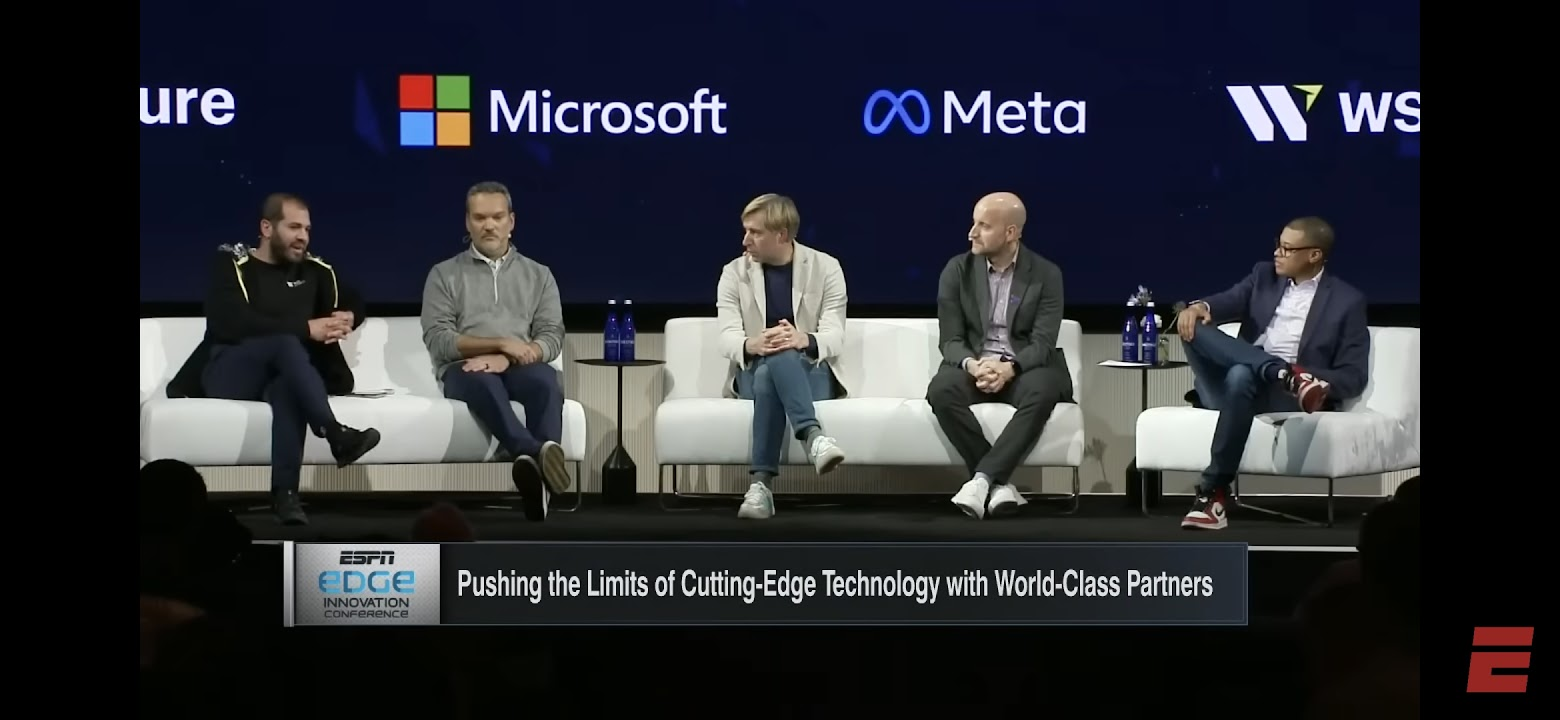
John Chleborad, Managing Director, Head of Global Brand for Accenture, reflected on the tangible impact of innovation partnerships, praising both the collaborative spirit and the real-world results. He highlighted projects ranging from faster, more efficient closed captioning to expanding access to sports like lacrosse and professional soccer through AI-generated summaries. Also noting their work with the NFL to bring the passion of the game to new international markets. Speaking as a business leader, technologist, and sports fan, he celebrated the talented individuals driving these innovations, highlighting not just the tools but the people making sports experiences smarter, faster, and more accessible.
Simon Crownshaw, Worldwide Strategy Director, Media & Entertainment for Microsoft painted a vision of the near future in which AI transforms how fans, operators, and teams interact with sports. Instead of scrolling and tapping, audiences will simply ask—and receive—personalized stories tailored to their interests. Crownshaw was clear that the magic of AI depends on more than flashy interfaces: it requires robust data, connected systems, and the infrastructure to support fully personalized, off-platform experiences. The promise is enormous, but so are the challenges of preparing the foundations to make it work seamlessly.
Ryan Dornbusch, Head of Sports, Reality Labs, Meta, highlighted the transformative potential of XR technology to expand the playing field for sports storytelling. By moving beyond traditional screens, XR enables immersive experiences such as courtside seats at the NBA or sideline perspectives at college football and the US Open, experiences that most fans would never have access to otherwise. He shared examples of innovative on-air uses, including Stefania Bell’s virtual medicine segment, where she explored a floating skeleton in an immersive studio, educating viewers on injuries like turf toe, and Dan Orlovsky’s first-person analysis of gameplay using Status Pro. Advances in video resolution, spatialized audio, and processing power are making these virtual experiences feel almost equivalent to being in the live venue. Dornbusch also emphasized the integration of second-screen content, from social media to fantasy and betting insights, synchronized with the live action. For him, the next wave of content is about using technology to give fans richer, more interactive, and more personal ways to experience sports.
Aviv Arnon, Co-Founder and Chief Business Development Officer, WSC Sports reflected on the five-year evolution of their partnership with ESPN, highlighting the dramatic scale of content automation now underway. WSC analyzes thousands of sports broadcasts, generating highlights in both horizontal and vertical formats, powering personalized experiences like SportsCenter for You and the Verts feed. Beyond live games, WSC is now integrating studio shows like First Take and the buzz-friendly Inside the NBA, bringing talent-driven content into the same automated ecosystem. Aviv emphasized personalization and generative AI as key drivers for future projects, with potential expansions into kids’ content and other unique formats.
The Promise and Challenges of AI in Sports Media
AI would be a recurring theme, underscoring both its promise and the operational challenges of scaling it in sports media. And while clearly highly excited about its potential, they stressed that effective deployment requires foundational work, collaboration, and a human touch to ensure content aligns with brand goals while delivering smarter, faster, and more personalized experiences for fans.
Inside the Animated Telecasts: Data to Storytelling
The Animated Telecasts Demo panel, moderated by Michael “Spike” Szykowny, VP, Edit, Animation, Graphics Innovation & Creative Production, ESPN Creative Studio featuring Jay Ward, Creative Director of Franchise, Pixar Animation Studios, Thommy Bouman, Business Development Lead, Beyond Sports, and Josh Helmrich, Senior Director, Media Stratgey, Business Development and Next Gen Stats, NFL, offered attendees an immersive behind-the-scenes look at the evolution of data-driven animated broadcasts. We were treated to a curated collection of footage, video, and photos that demonstrated the evolution of these broadcasts as the panel shared their history.
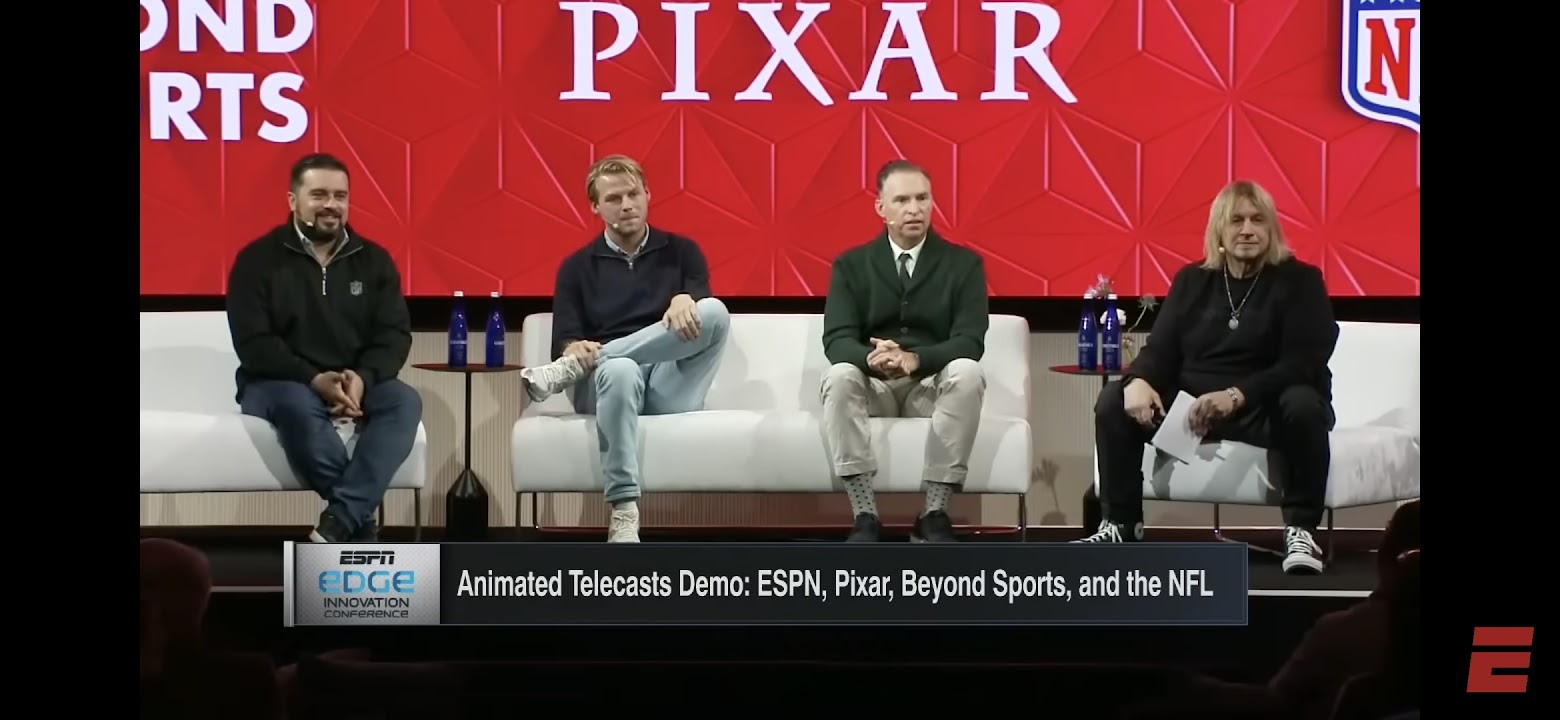
Helmrich from the NFL explained that the league’s traditional statistics, such as rushing and passing yards, had remained static for a long time. As tracking technology advanced, they began placing tracking devices on players to create a comprehensive data platform designed to benefit health and safety, coaching, scouting, and video games, with a key focus on enhancing the fan experience through new media. Early applications included animated telecasts developed in partnership with forward-thinking media organizations such as ESPN, marking the first steps toward turning raw tracking data into engaging, fan-facing content.
Beyond Sports realized they could do more than just analyze player data. Initially focused on player analysis using tracking data, they approached the NFL and ESPN Netherlands with the idea of creating a full alternate broadcast. The first iteration relied on Next Gen Stats tracking, which provided player positions and ball location, but lacked height and movement details. Beyond Sports applied animations to the data to visually simulate realistic player and ball motion. This broadcast, streamed on Twitch and commentated by former NFL player Dave Anderson and a Twitch streamer, successfully engaged a new audience by allowing viewers to ask questions and follow the action interactively.
The next major advance came from combining wearable tracking with optical tracking from cameras. Wearables provided continuous, reliable data, while optical tracking added detailed movement and body-point information. Merging these datasets allowed Beyond Sports to produce highly realistic player movements and visuals, creating the most natural representation of the game.
While I enjoyed previous iterations like the Toy Story and the Simpsons clips, and stills from the upcoming Funday Football in the world of Monsters, Inc. were really impressive. Showing how quickly technology is improving. In developing Monsters Funday Football, the team overcame world-building challenges, creating a cheer floor and filling the stadium with 6,000 carefully selected monsters whose forms, colors, and movements properly populated the venue while remaining manageable for animation.
A presentation highlight was seeing the animatic for a halftime cheer canister challenge between Mike and Sulley as Jay from Pixar discussed the process. In the animatic, Mike initially climbs a ladder wearing a parachute, but during collaborative sessions, they realized a helmet makes more sense within the setting, protecting him while also creating the comedic mishap needed for the scene. This adjustment illustrates the creative problem-solving involved in refining the animated story accompanying the data-driven game portion. Overall, the session illustrated how Pixar, Beyond Sports, ESPN, and the NFL combined beloved characters, data-driven animation, and immersive storytelling to create a playful, engaging fan experience.
ESPN’s Next Chapter in DTC
During the ESPN DTC panel, NFL reporter Kimberley A. Martin sat down with Jo Fox (SVP, Marketing), John “JT” Lasker (SVP, ESPN DTC), and Brian Marshall (VP, Sports Products & Strategy) to explore the next evolution of the network’s direct-to-consumer strategy. The conversation highlighted how ESPN is reimagining the fan experience in a rapidly changing media landscape.
Lasker explained that ESPN’s direct-to-consumer offerings are built around three key pillars: accessibility, content, and enhancements. They now offer fans two clear options: ESPN Select (historically ESPN Plus) and ESPN Unlimited, which provides all of ESPN’s networks and services under a single subscription. More than just a streaming product, this DTC strategy allows ESPN to innovate in content delivery, expand rights partnerships, and design experiences that meet fans wherever they are.
Marshall detailed ways the refreshed ESPN app transforms how fans interact with live sports. Features like Stream Center sync the app with live TV, delivering real-time stats and highlights, serving as companion content. Meanwhile, SportsCenter for You-BETA, powered by generative AI, creates thousands of personalized highlight clips daily, blending select SportsCenter voices with curated storylines to deliver a highlights experience uniquely tailored to each fan. It's an ambitious project debuting with the "Beta" tag, indicative of its evolving nature.
The panel also highlighted recent partnerships and innovations that expand reach and engagement. From bundles with NFL Plus Premium and Fox to new content deals with WWE and the NFL, ESPN is bringing sports to a wider audience than ever before. Integrating ESPN with Disney+ further opens the door to casual fans, giving them access to sports alongside entertainment in a single ecosystem. Whether fans have cable, are cord-cutters, or looking for a skinny bundle, ESPN is now accessible to everyone. And moving beyond traditional sports spaces. From retail activations at Walmart and Complex to social platforms like TikTok and Snapchat, the aim is to reach not only diehard fans but also the “sports curious”, inviting new audiences into the ESPN ecosystem.
When it comes to marketing and fan engagement, Fox emphasized the diversity of modern sports fans. Some crave X’s-and-O’s analysis, while others are drawn to community and conversation. The goal is to meet all of them where they are, creating campaigns and experiences that resonate with both hardcore fans and those just discovering sports.
Looking ahead, the panelists were enthusiastic about the future: more personalized content, innovative app features like Verts for immersive short-form video, and major events like Super Bowl 2027 delivered across ESPN, ABC, and Disney+. Throughout the discussion, it was clear that ESPN is leveraging technology, creativity, and fan insight to continue serving passionate sports enthusiasts like never before while also building the next generation of fans.
XR & Immersive Storytelling: Expanding the Fan’s World
The XR: Immersive Sports Storytelling panel showcased how technology and narrative are merging to create new fan experiences. Sonia Doshi (VP, Strategic Operations, Design, and Production for the Office of Technology Enablement) shared her personal draw to mixed reality, noting that as a fan, she wants to explore deeper story arcs and behind-the-scenes perspectives. XR allows audiences to step into these worlds, and her team experiments with creative and technical approaches that go beyond traditional 2D screens.
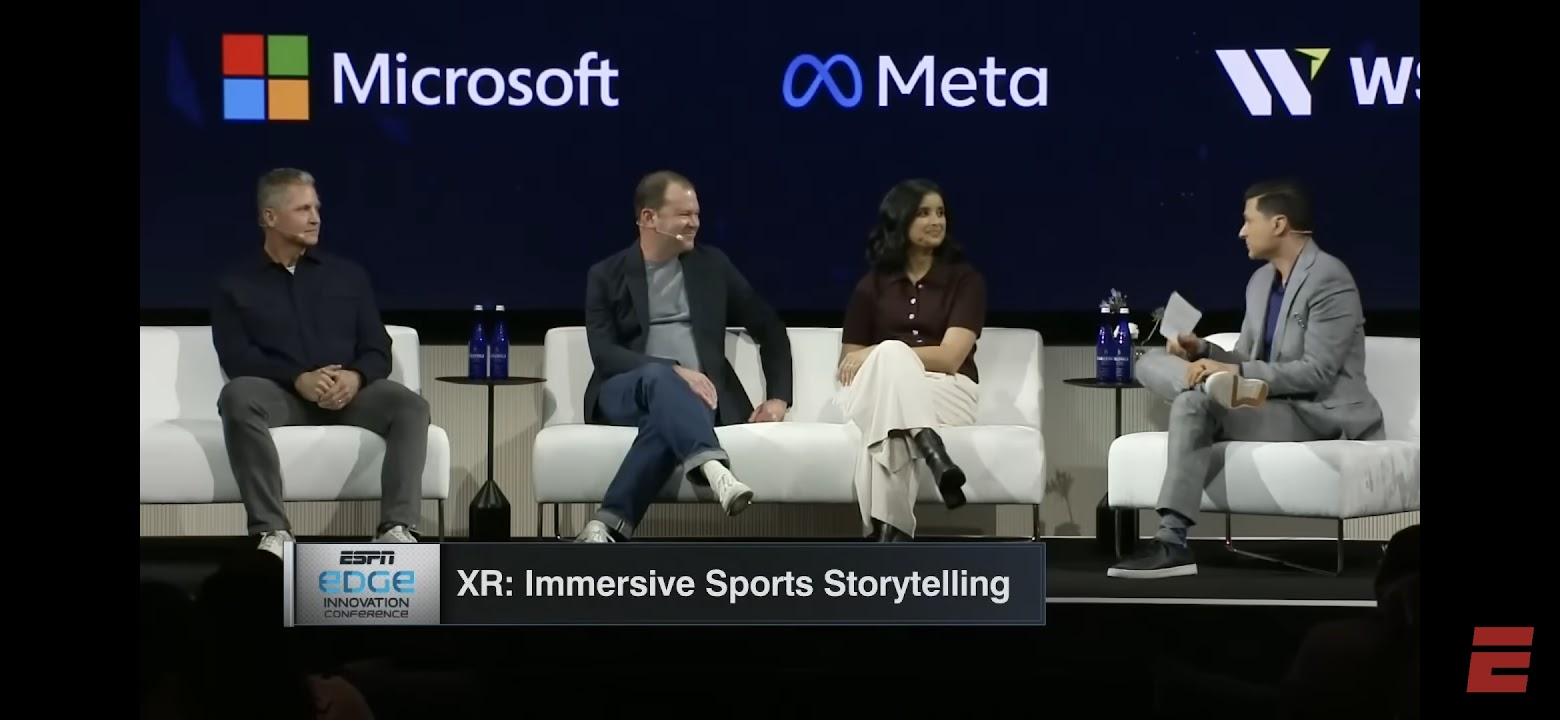
Tim Alexander (Visual Design Director, ILM) shared his own journey from Disney’s Buena Vista Visual Effects to ILM, where he’s spent nearly three decades exploring real-time, immersive XR storytelling. Alexander recounted how early projects like Carne Arena, which earned a special Oscar, ignited his fascination with interactive storytelling. For Alexander, XR is a playground for blending traditional filmmaking, game development, and narrative innovation, and ILM’s ethos of experimentation allows them to explore new forms of engagement while maintaining story at the core.
Bob Morgan (VP, Reality Labs Entertainment, Meta) explained how the Quest VR headset provides a new storytelling canvas. He described Meta’s role as a guide for creators, helping them translate creative intent into fully immersive experiences. From 2D high-resolution screens to fully realized 3D cinema, and ultimately breaking the “rectangle” of traditional storytelling into fans’ environments, Morgan highlighted the importance of thoughtful, audience-centered design—whether it’s sports, concerts, or cinematic worlds like Star Wars.
The discussion delved into tangible examples: Vader Immortal and other Star Wars VR experiences, emphasizing the care taken to balance immersion with narrative integrity. Fans aren’t just observers; they are participants, stepping into iconic moments in ways previously unimaginable. Panel host Arda Öcal described his experience with Vader Immortal and emphasized that it had reshaped his perspective on storytelling, showing the potential of XR to place audiences directly inside narratives and fundamentally alter how fans engage with media. Even for those who are not Star Wars fans, he believes the immersive approach demonstrates a new standard for future content.
Looking to the future, the panel highlighted both practical and creative priorities. Meta is focused on refining production techniques, reducing friction, and making 3D and XR content more accessible and natural for audiences. Doshi and Alexander encouraged experimentation in both consuming and creating content, stressing that XR’s potential is realized through curiosity, iteration, and a willingness to expand pipelines and explore new creative approaches. Across Disney, ILM, and Meta, the mission remains consistent: to craft deeply resonant and immersive experiences that transport audiences, whether they are diehard sports fans, casual viewers, or first-time participants in XR storytelling.
ESPN Generate: Test Screening with Q&A
The event’s final panel, ESPN Generate: 30 for 30 Test Screening with Q&A, was hosted by Marsha Cooke (VP and Executive Producer of ESPN Originals and 30 for 30), and it delivered a paradigm-shifting experience. The session featured the documentarians behind the Oscar-nominated Eno, Anamorph’s Chief Creative Officers, Gary Hustwit and Brendan Dawes. What they presented was less a film screening and more a “what if” exploration of storytelling possibilities, leaving me wildly imagining new ways the Disney Company could embrace this approach.
Eno is a groundbreaking piece of cinema, a feature film that changes each time it is experienced. This is not the result of generative AI but of precisely designed software that draws on hundreds of hours of archival footage, original interviews, and other media to deliver a unique documentary experience with each viewing. For tonight’s demonstration, the team applied these techniques to a portion of ESPN’s archival library, treating the audience to two short films, both titled Resilience, each distinct in interviews, footage, and musical score. They also demonstrated a personalized documentary built around Tom Brady, a subject whose extensive series provided a rich foundation for the remix demonstration. The session offered a tantalizing glimpse into another avenue for deeper fan engagement and highlighted the boundless potential of technology-driven storytelling.
Closing Reflections: Innovation With Intention
Innovation, when guided by intention, allows a story to reach farther than ever. At ESPN Edge, I saw firsthand that the same spirit behind theme park magic can also infuse sports broadcasting with wonder. The curiosity that put Mary Poppins dancing alongside animated penguins is now driving broadcasts that place viewers in a quarterback’s cleats or put Mickey and his friends on an NBA court. Whether it’s a cherished animated classic or a thrilling fourth-quarter drive, great storytelling has the power to transform us. Through Edge, ESPN is discovering new ways to make that transformation possible for sports fans everywhere.