
Disney’s Anime Strategy Faces a Test with Twisted Wonderland’s Global Launch


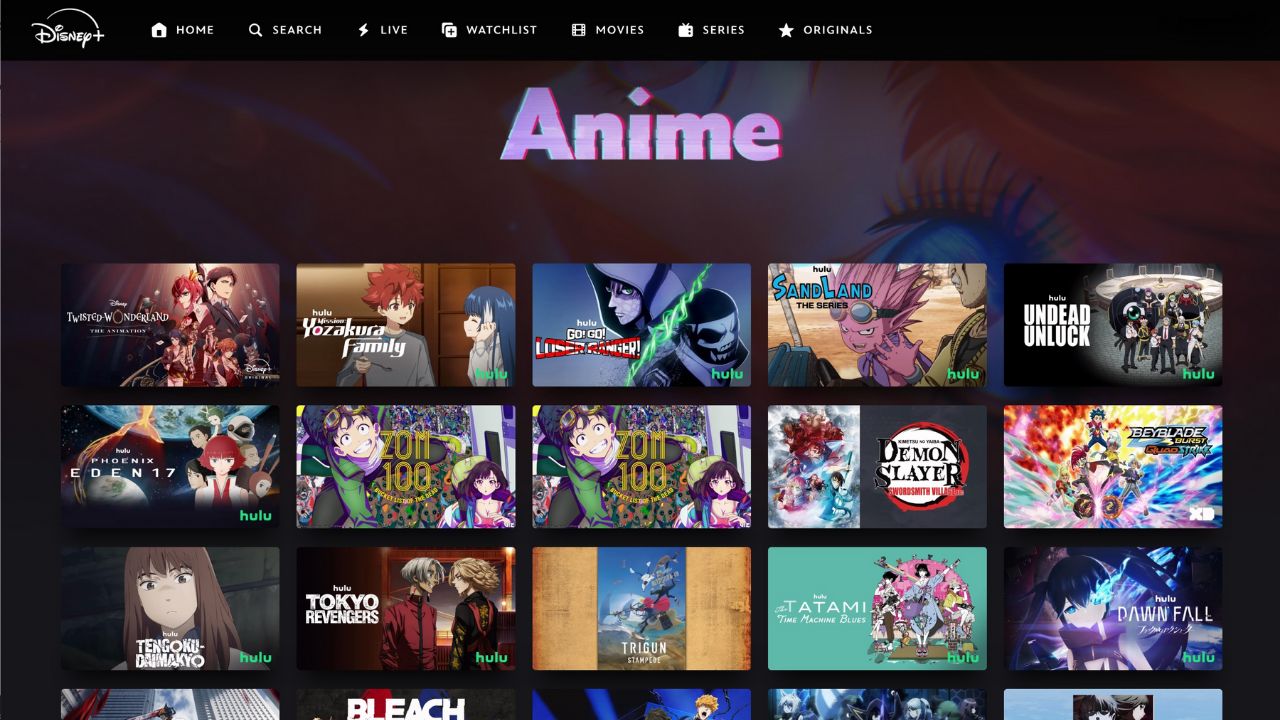
Disney Twisted Wonderland: The Animation had an epic global launch last week. Based on the hit mobile game and its manga adaptation, it’s a rare anime series featuring Disney IP. The story follows a Japanese teenager who gets whisked away to a magic academy in another realm, where Disney Villains inspire everything. Here in the U.S., the series streams on both Disney+ and Hulu, and it’s a good thing both services are an option, because it turns out that anime consumption is a bit of an afterthought on Disney+, at least for some of us.
Anime fans are often split on whether they prefer to watch a show in its original Japanese language with subtitles or experience its localized dub. To Disney’s credit, Twisted Wonderland is available dubbed in all major languages every Wednesday, coinciding with the release of new episodes worldwide. And as far as dubs go, it’s a very faithful adaptation. But for those who prefer to watch the show in Japanese with subtitles, Disney+ leaves fans hanging.
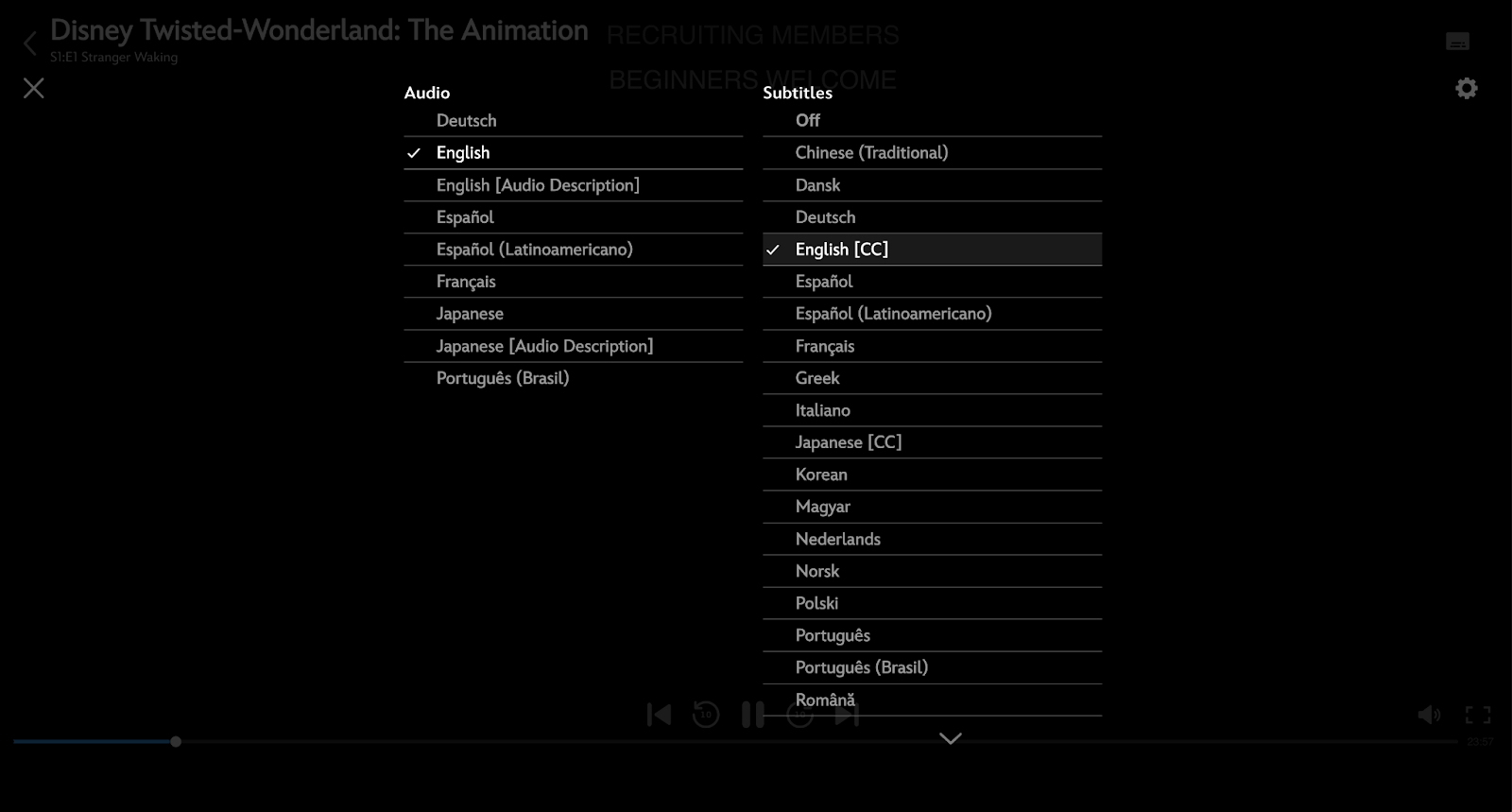
Fans can watch Twisted Wonderland on Disney+ with Japanese audio, but the only English subtitle option matches the dub, which isn’t a literal translation of what was said in Japanese. Anime fans refer to this phenomenon as “dubtitles” instead of subtitles. The popularity of dubs has increased dramatically in recent years, as companies have become more faithful to their adaptations. Still, there is a subset of anime fans who will always prefer to watch in Japanese with English subtitles, and the Disney+ platform isn’t making an effort to cater to this demographic when it comes to their exclusive anime titles.
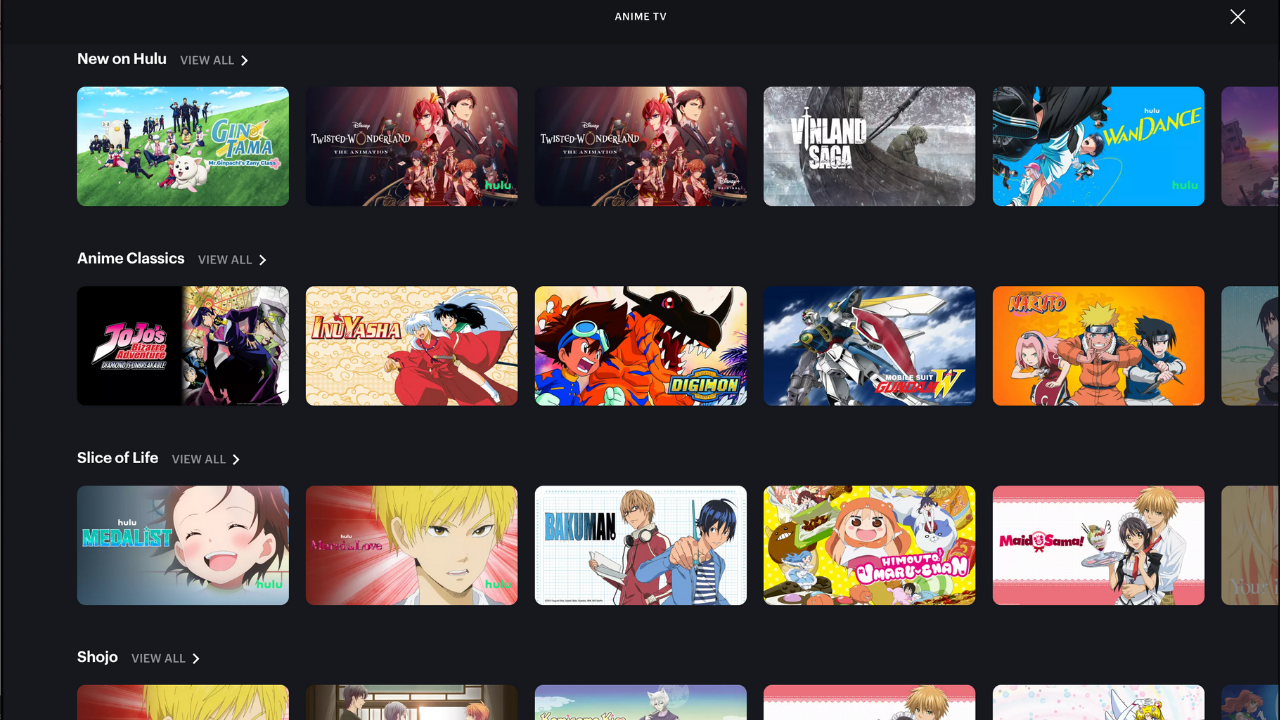
Hulu has long been a major player in the anime streaming market in the U.S., competing with major platforms like Netflix and Prime Video, as well as specialized brands like Crunchyroll (owned by Sony) and HIDIVE (owned by AMC Networks). Hulu subscribers will find two versions of Twisted Wonderland on that platform: the dub, branded as a Disney+ Original, and the original Japanese version, featuring Hulu branding. This is the only way fans in the US can currently watch this show in Japanese with true subtitles.
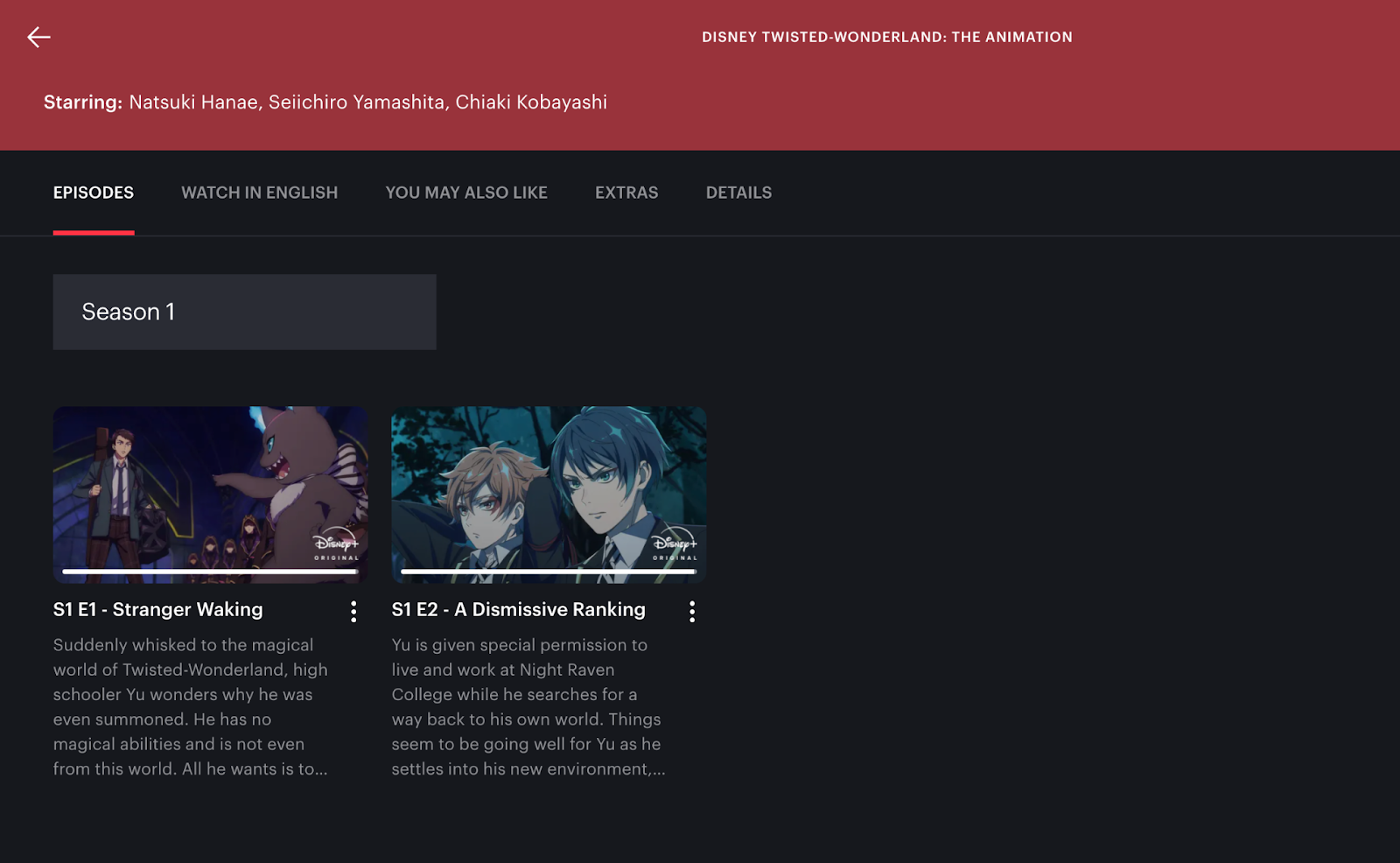
Hulu’s streaming platform goes above and beyond, conveniently offering the option to switch between language versions within the show’s menu(s). However, this means that while Twisted Wonderland is technically available to stream on both Disney+ and Hulu, the actual subtitled version is exclusive to Hulu. As corporate Disney tries to wean users off the Hulu platform in preparation for its discontinuation next year, it’s a curious move. Don’t they want Hulu subscribers to get used to experiencing everything through the Disney+ platform?
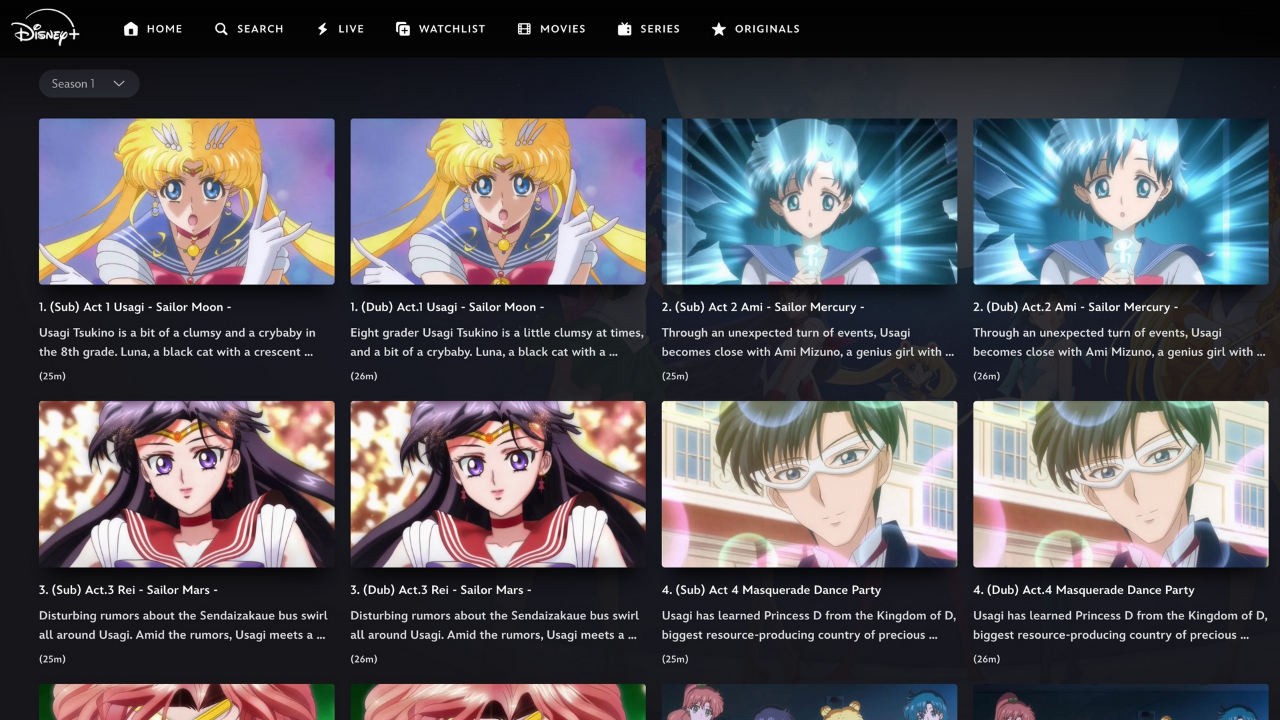
This issue is unique to anime titles that Disney owns sole streaming rights to in the U.S. As an example, Sailor Moon Crystal is distributed in the U.S. by Viz Media, and the show has been available to stream from multiple providers. Anime titles that aren’t exclusive to Disney+ have duplicate episodes, clearly labeled as Sub or Dub. Conveniently, if you start with the dub, it will continue to auto-play only those episodes, and vice versa with the subs. Anime fans will find the same to be true of other popular titles that stream on Disney+ and through licensed deals, including Demon Slayer and Bleach.
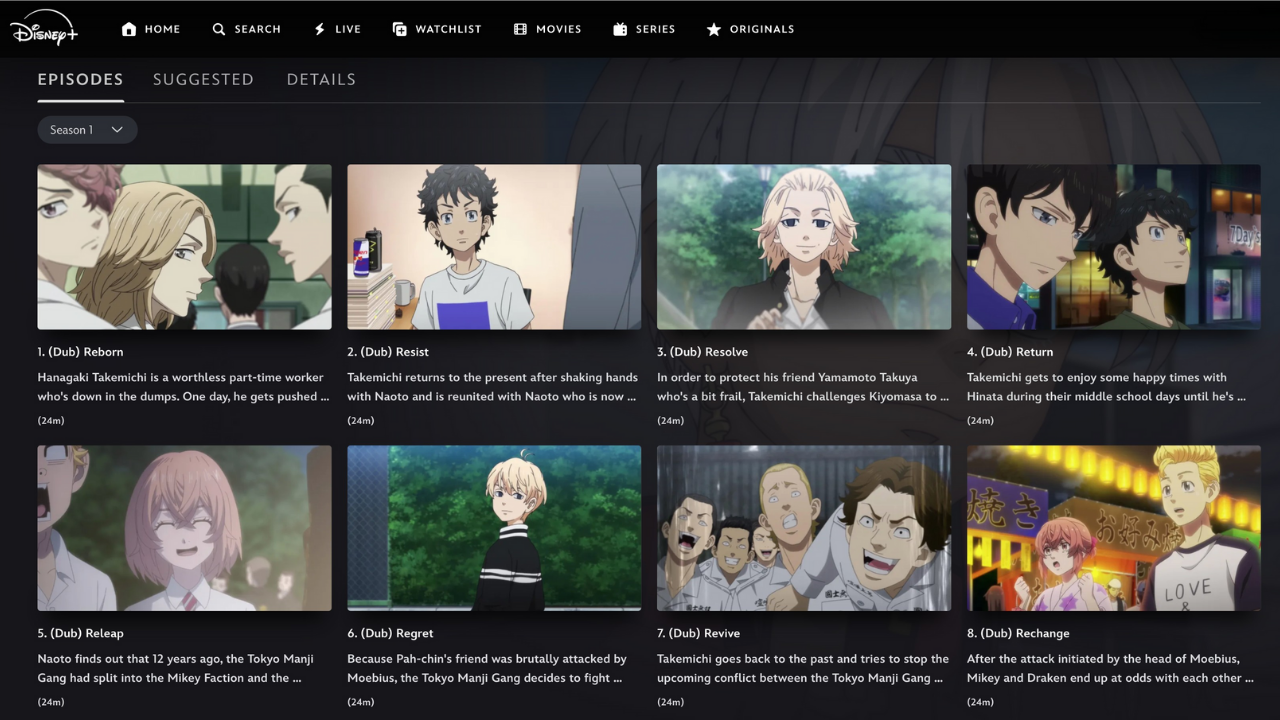
A title that Disney has exclusive streaming rights to in the US, such as Tokyo Revengers, is only available dubbed on Disney+, and the same applies to other shows like Go! Go! Loser Ranger, Undead Unluck, and Tengoku Daimakyo. All of these titles are technically Hulu Originals in the U.S., meaning I have access to them on Disney+ because I have the Disney Bundle. However, if I want to watch them in Japanese with subtitles, the only place to do so is on the soon-to-be-obsolete Hulu platform.
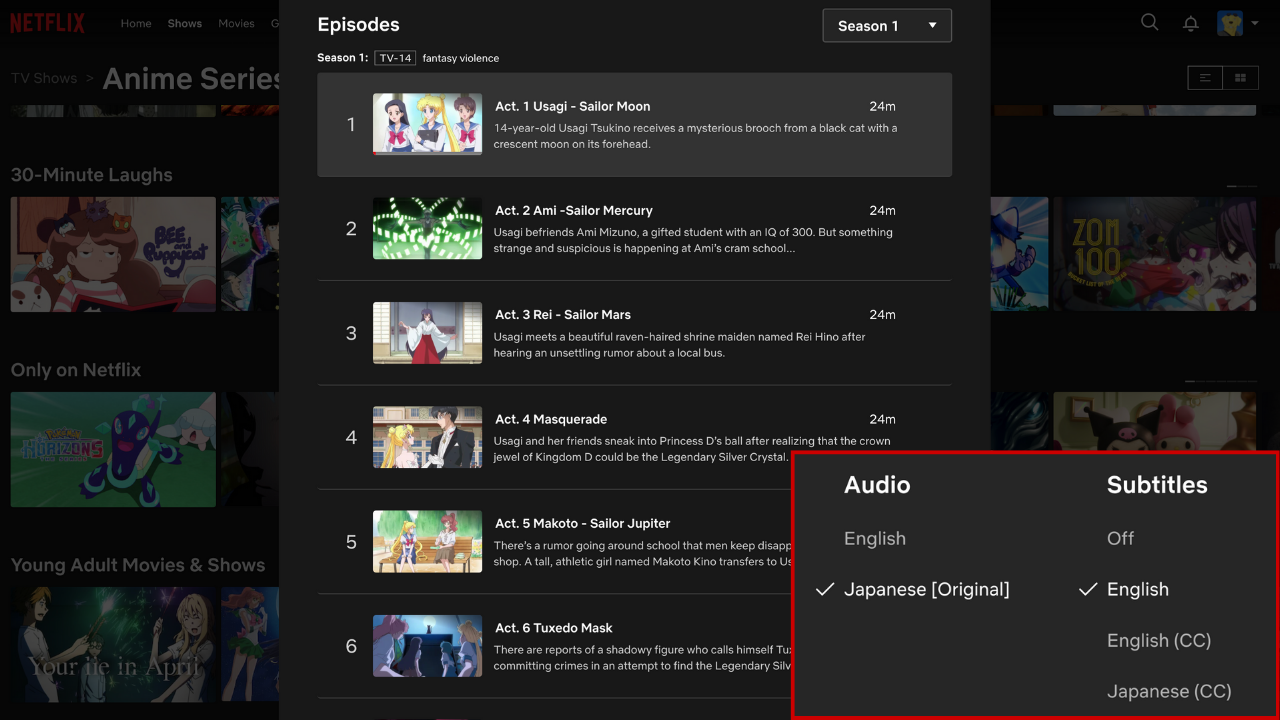
Full disclosure: I’m not the world’s biggest anime consumer, and most of the titles exclusive to Disney’s streaming platforms haven’t been of much interest to me, until Twisted Wonderland. But it seems odd that Disney would want to force a percentage of anime fans to stay on Hulu when there’s a corporate directive to drive users to the Disney+ platform as much as possible. Not to mention that this issue can be easily solved via the quick and easy addition of another subtitle option on Disney+. Netflix, for example, doesn’t duplicate episode details based on whether they are subbed or dubbed. They presume that users who care will change the language and subtitle settings within a title. Within Netflix’s catalogue of anime, it’s understood that “English” subtitles refer to a literal translation of the Japanese script, while “English [CC]” indicates dubtitles.
Until Disney+ figures out a way to satisfy anime fans who enjoy their shows in Japanese with translated subtitles, the platform will have a difficult time branding itself as a top destination for anime fans. Perhaps the runaway success of Twisted Wonderland will encourage them to make this a priority before the Hulu platform is discontinued. Until then, Hulu is the place to go for the original language version of Disney’s hit new anime series.
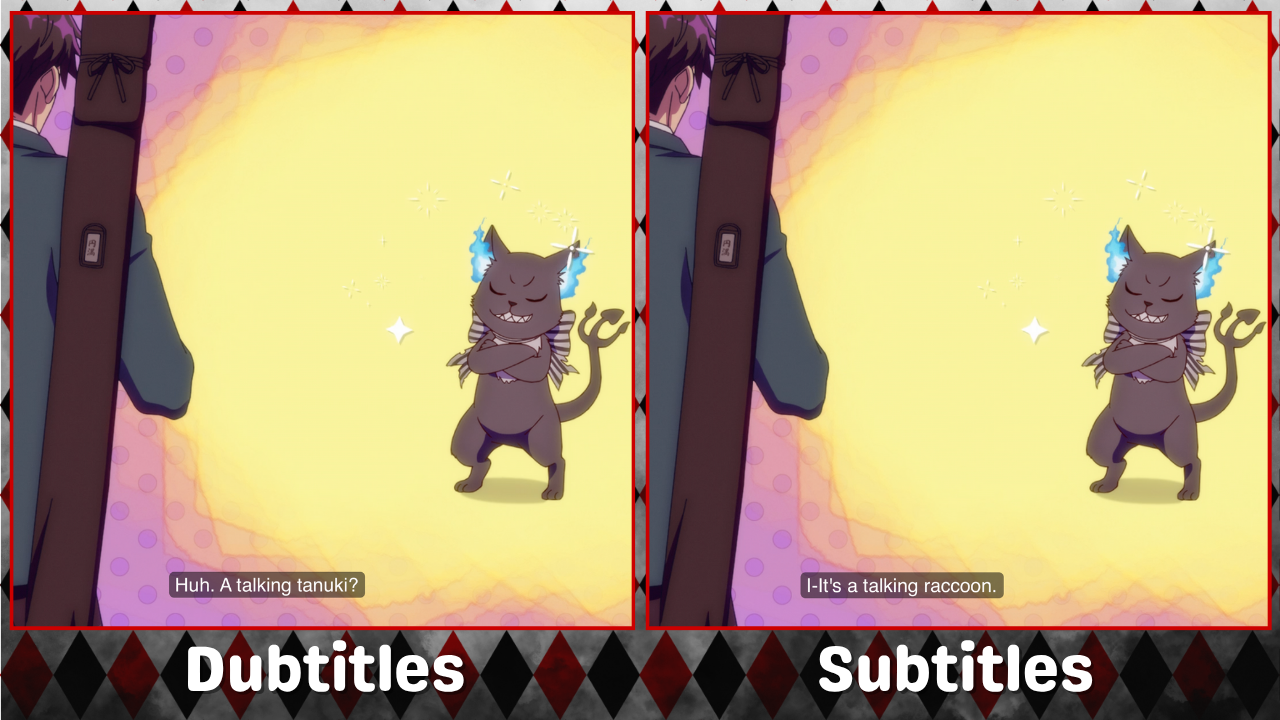
Speaking of Twisted Wonderland’s subtitled experience, overall, the dub provides an accurate adaptation. In some cases, it’s even more accurate. For example, in the premiere episode, when the cat-like monster Grim first appears, Japanese teenager Yuken perceives him to be a tanuki, a much mythologized canine species native to Japan. The subtitle translation swaps tanuki for raccoon. Tanukis are not raccoons, which are procyonids native to North America.
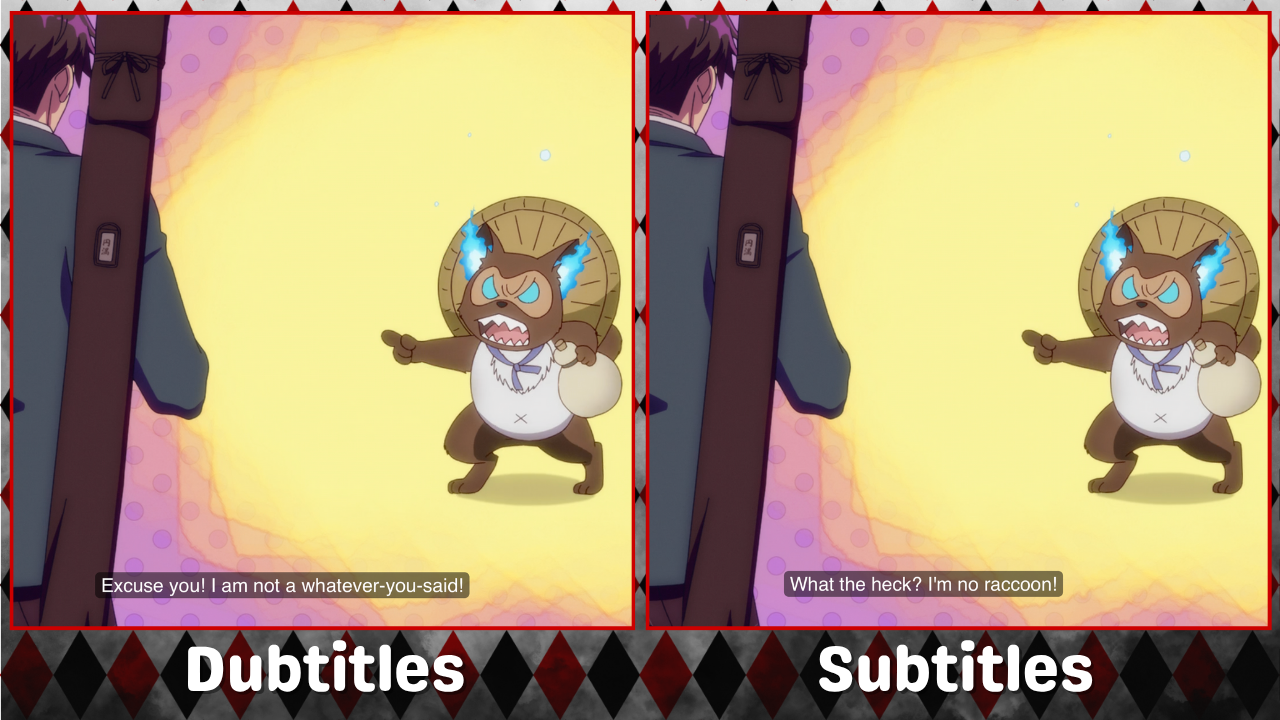
Raccoons were popularized in Japan in the 1970s, thanks in part to Disney’s live-action film Rascal and a popular anime adaptation of its source material, driving imports of the species as domestic pets that inevitably settled into Japan’s forests. It’s not impossible to believe that Yuken would see Grim and think raccoon, except for the fact that as Grim denies this accusation, he imaginatively shapeshifts into a tanuki! Anyone who's seen Studio Ghibli’s Pom Poko (first distributed in the U.S. by Disney) will know what this is.
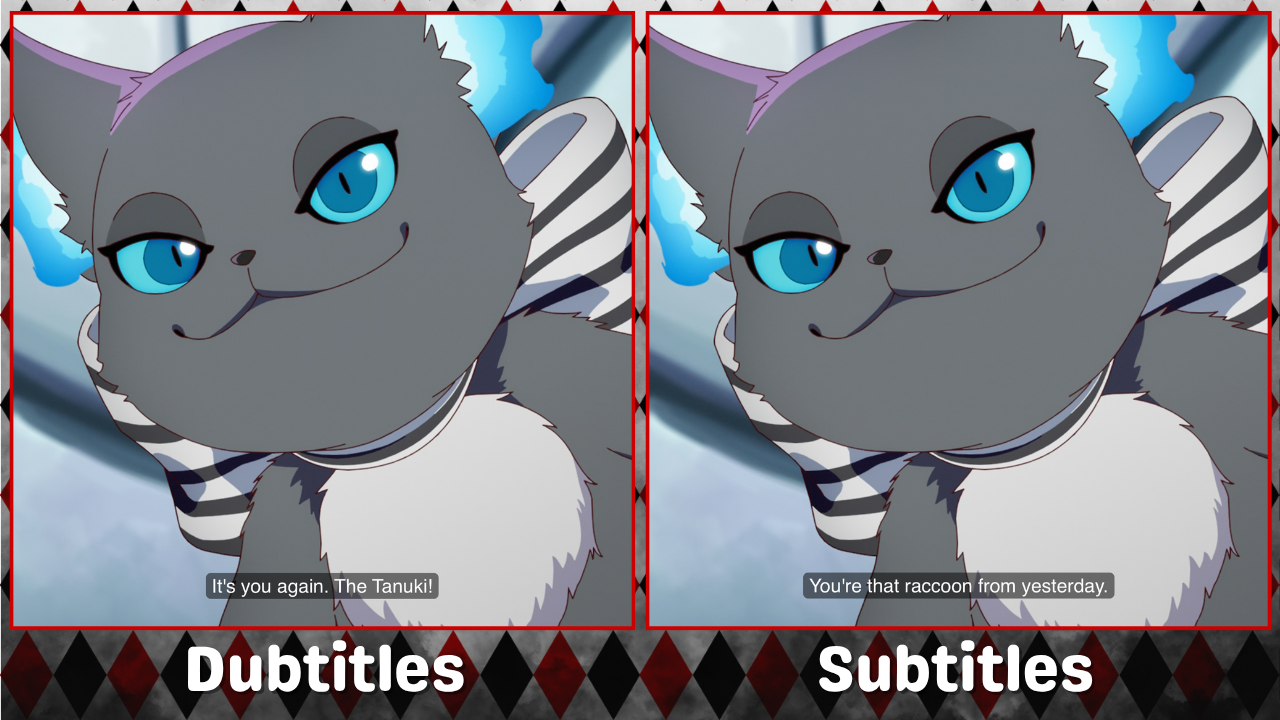
The swapping of tanuki for raccoon is consistent in this week’s second episode, too.
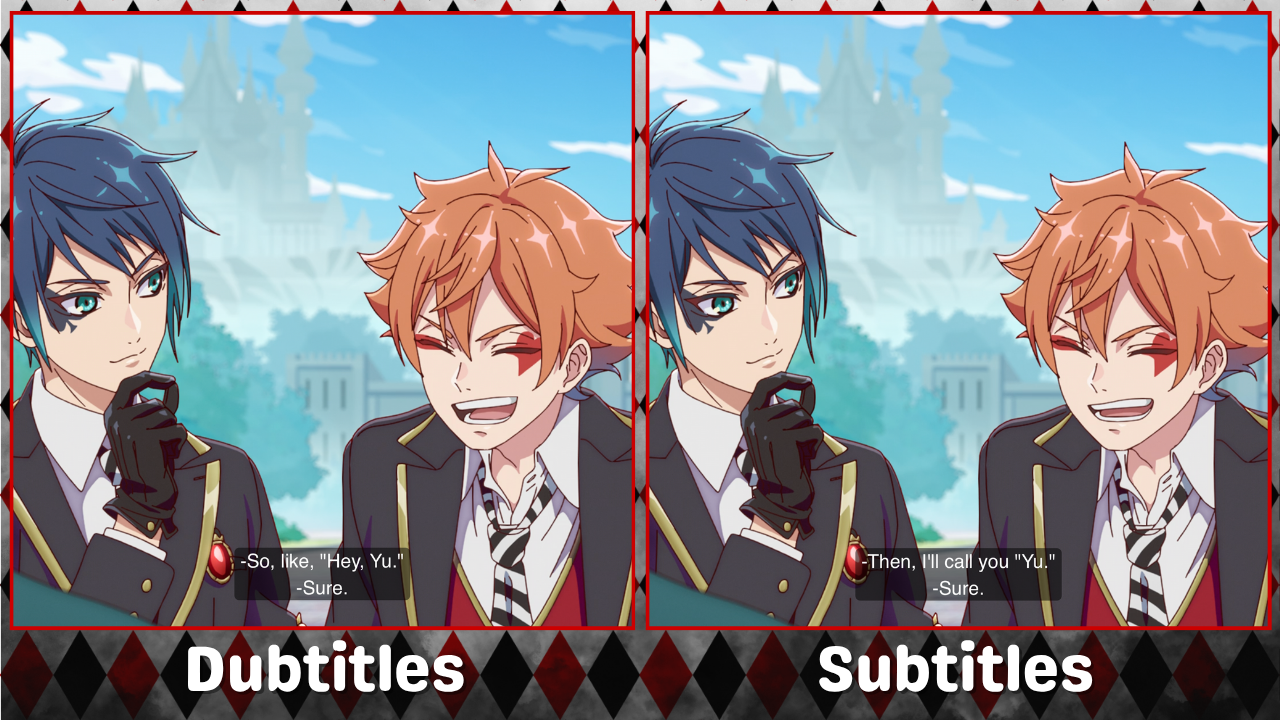
As is often the case when it comes to subtitles vs. dubtitles, some cultural specificities don’t translate well. One of them is the handling of Yuken’s nickname, introduced in the second episode. Japan is an unknown realm to the residents of Twisted Wonderland, so Yuken’s name is difficult to pronounce for his peers. In a nod to the mobile game, his name is shortened to “Yu,” which was a bit of a language joke. Most Japanese people understand some common English phrases from consuming our media, and our use of the word “you” in reference to others (a very informal concept in Japan) is among them. A direct example is saying “Hey, you” to someone. The literal translation of this moment is a joke in the Japanese version, evidenced in the subtitles when Ace says, “I’ll call you ‘Yu.’” It’s very much lost in translation in the dub, where the line becomes “So, like, ‘Hey, Yu,’” a moment that plays differently audibly than it does in print.
There are pros and cons to consider when comparing dubs vs. subs. A growing number of anime fans are leaning into dubs over subs, while a percentage of the fandom will always prefer a closer approximation to the original creators’ intentions. And then some fans want to seek out both because they love a show so much that they want to see it from every angle. Hopefully, Disney+ can cater to both sides of the anime fandom with their original streaming titles.