
TV Review: "The Beatles Anthology" Gets a Gorgeous Restoration for 2025, Plus an Additional New Episode


This week will see the debut of a newly remastered version of The Beatles Anthology documentary series from 1995 on Disney+, including an all-new ninth episode. Laughing Place was provided with early access to a screener of this version of the series, and below are my thoughts on its release.
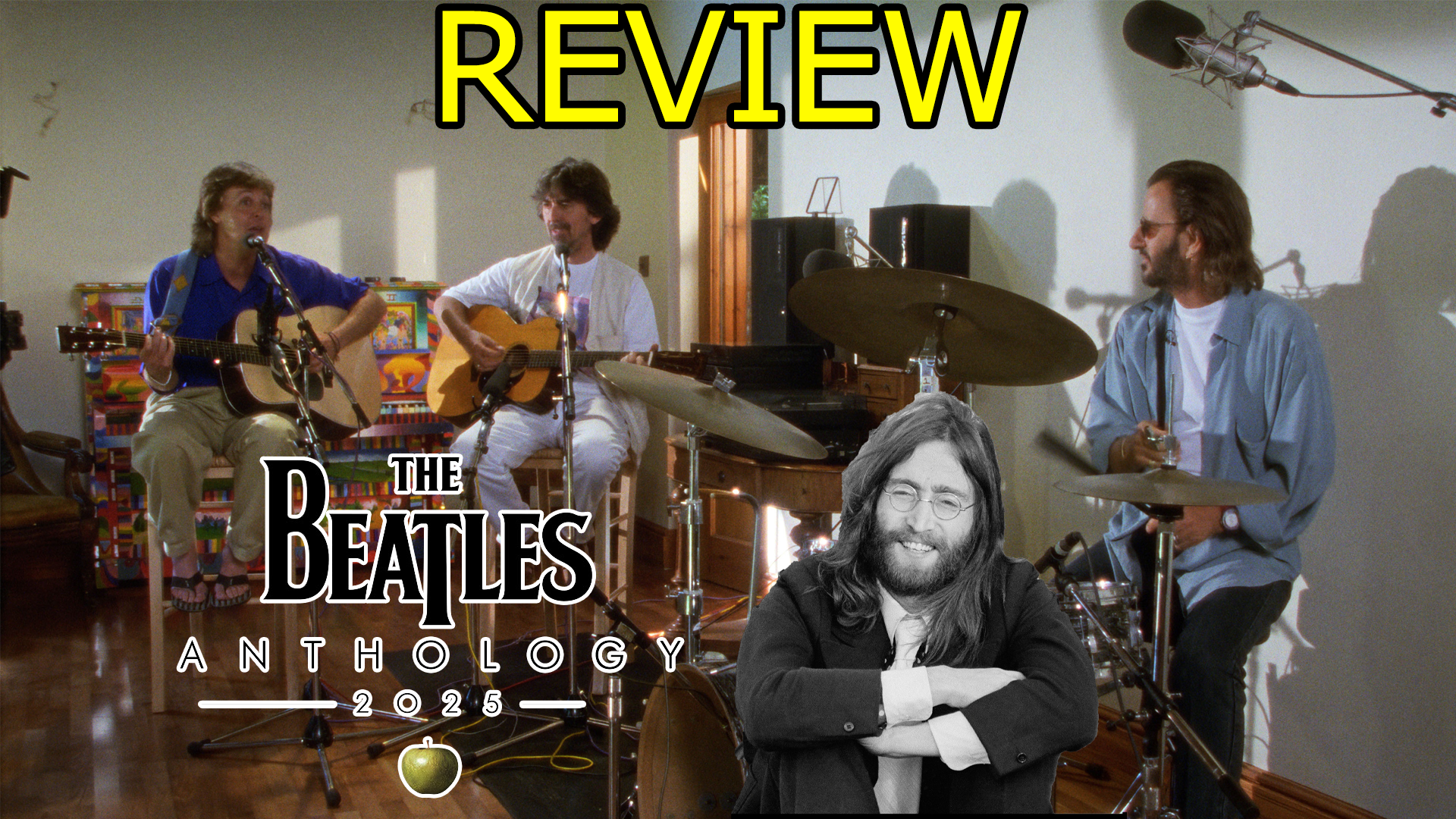
I was almost 16 years old when The Beatles Anthology aired on ABC in the 90s, which would have been about 30 years since the release of the band's now-classic album Rubber Soul (notably, The Beatles released three total studio albums in 1965, churning out hit record after hit record during that period). Now it's another three decades later, I'm nearly 46, and The Beatles Anthology is getting a remastered Disney+ rerelease from filmmaker Peter Jackson's Park Road Post facility in New Zealand. You may recall Jackson also directing another acclaimed Beatles documentary called Get Back, which hit Disney+ in the fall of 2021. And then Beatles '64, produced by Martin Scorsese, was released last year. Prior to those two, we got The Beatles: Eight Days a Week from director Ron Howard on Hulu in 2016. But unlike those three examples, which each focused on a specific point in the band's existence, The Beatles Anthology was approached as a the definitive career-spanning chronicle of what many consider to be the greatest rock 'n' roll band of all time.
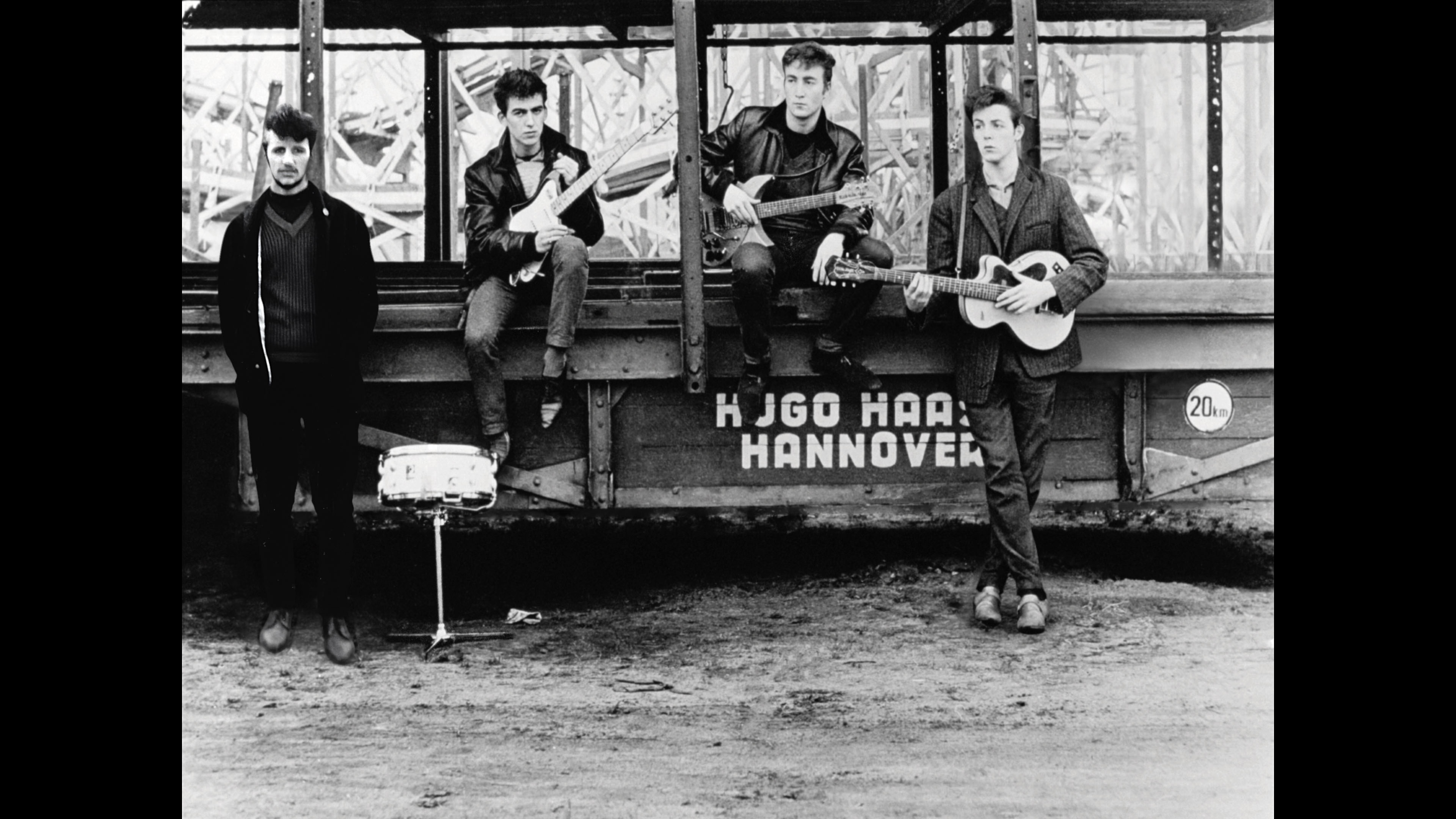
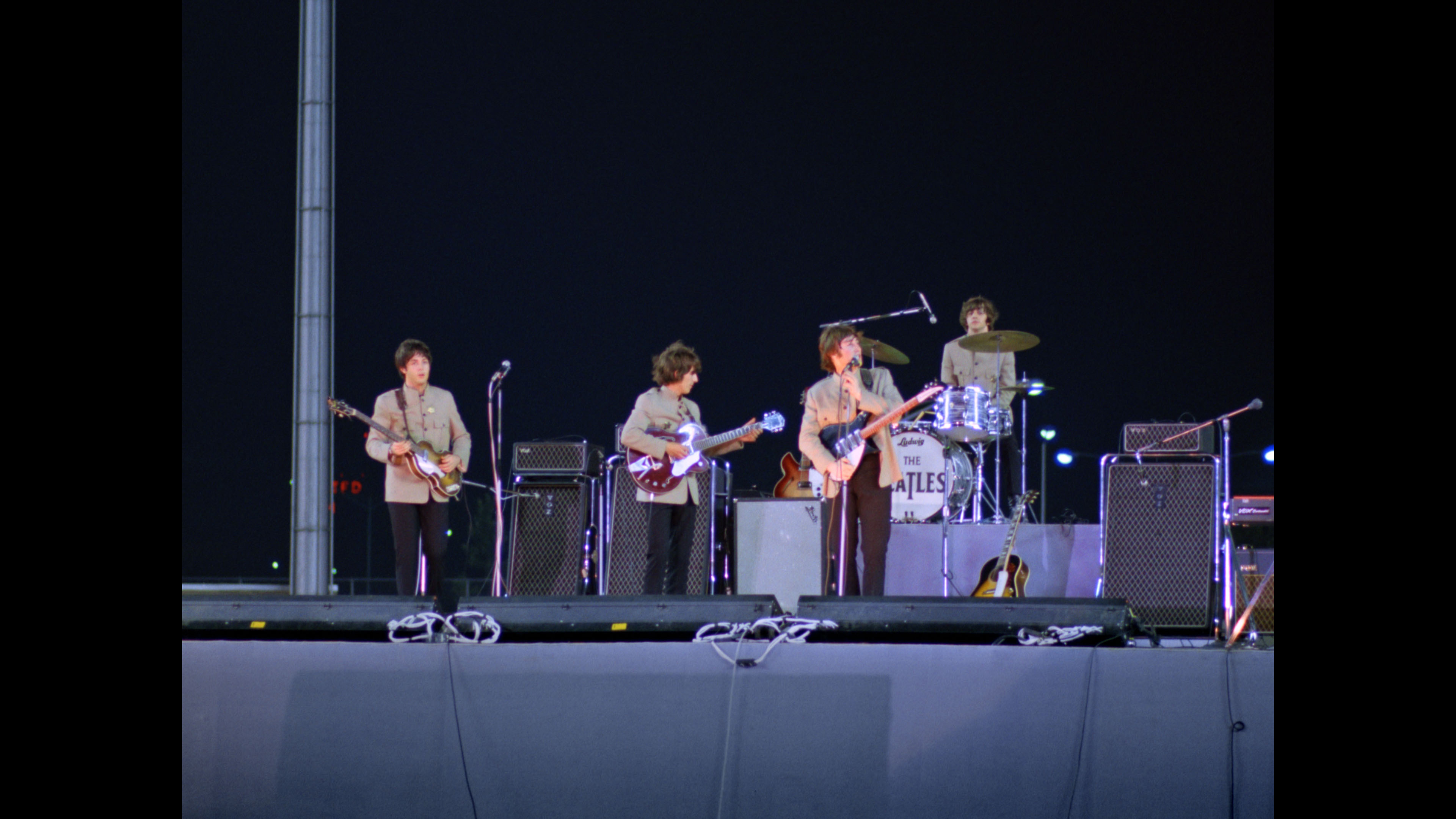
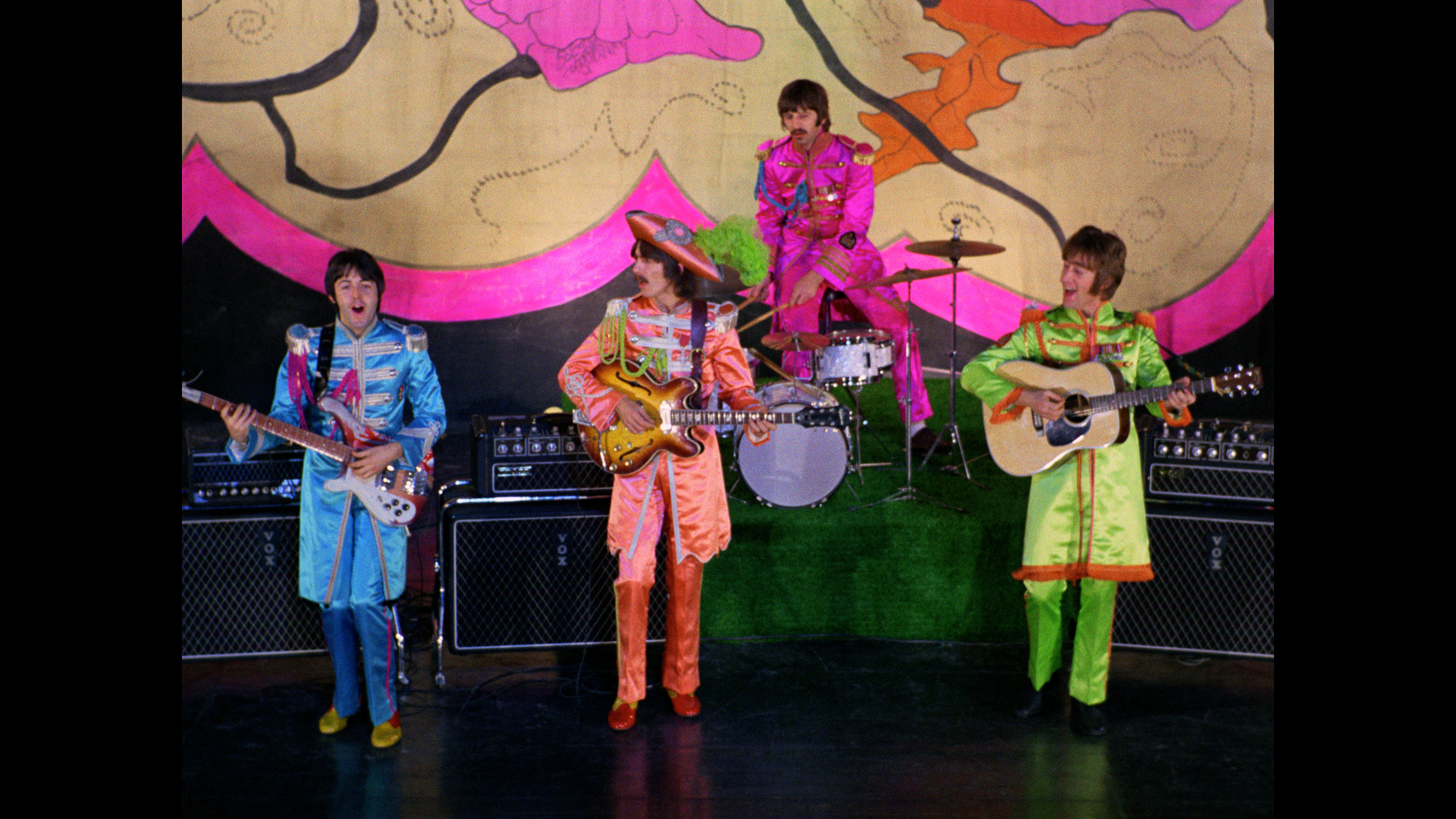
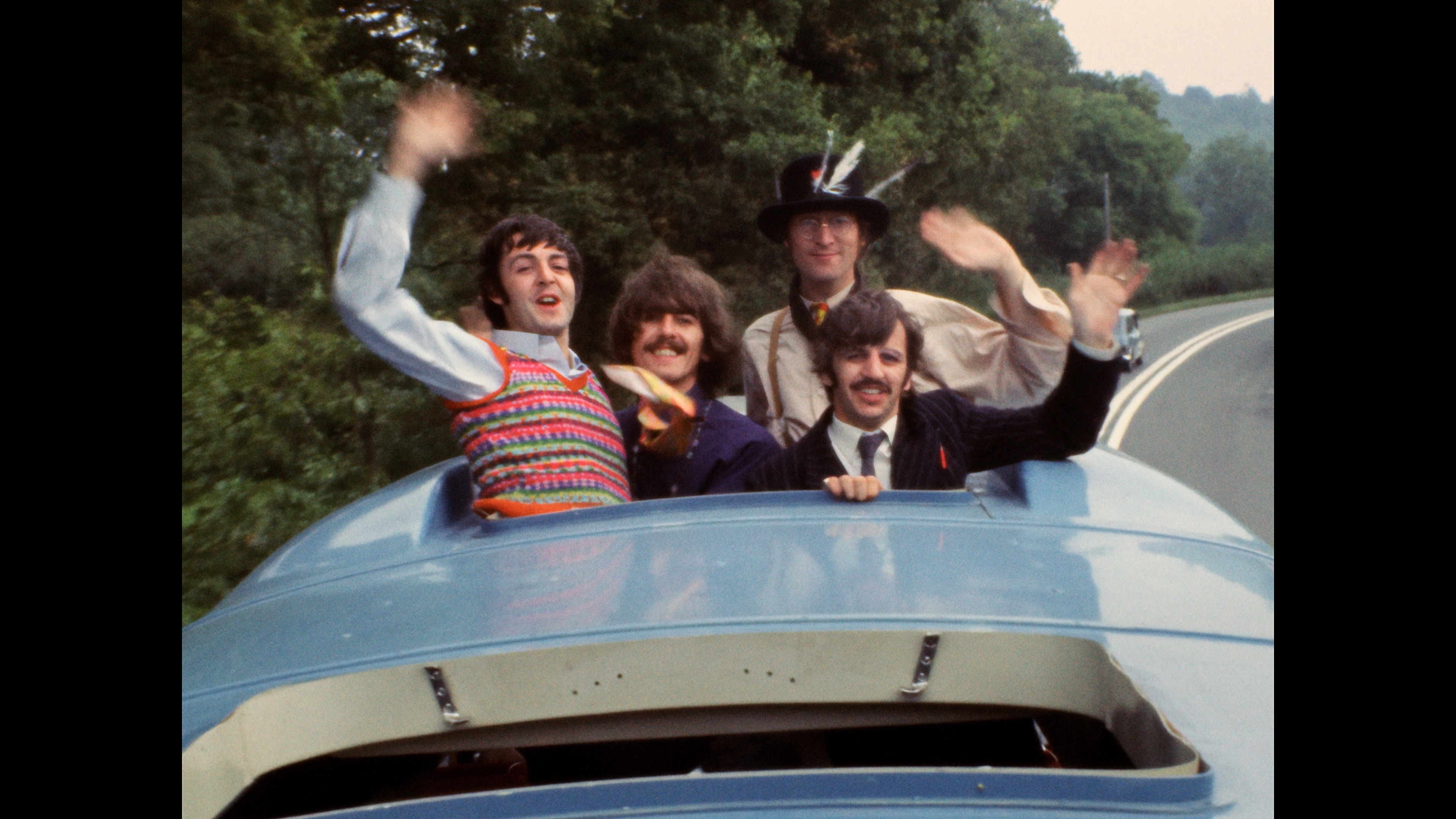
For the purposes of this review, I rewatched the first full episode of The Beatles Anthology in its newly restored format, followed by selections from the middle seven installments, and then the new, ninth-episode finale in its entirety. I own a boxed set of the 1990s version of the series on VHS tape, which means I haven't sat through it in a while, as while I do still have the VCR I used as a teenager, it hasn't been hooked up to a television in years. So I was excited to dive back in to Beatlemania, although when I heard about the remastering, I had some reservations. I was a little concerned that what we unabashed cinephiles call "original aspect ratio" might be ignored as the documentary is upgraded to widescreen HD, though with Peter Jackson involved I should probably have known better. The first great news I can give you in this review is that, as far as I can tell, archival footage that should be presented in the 4:3 ratio retains those dimensions, with pillar-boxing filling up the negative space on the sides of the frame (see the still-frame examples in the images above and below).
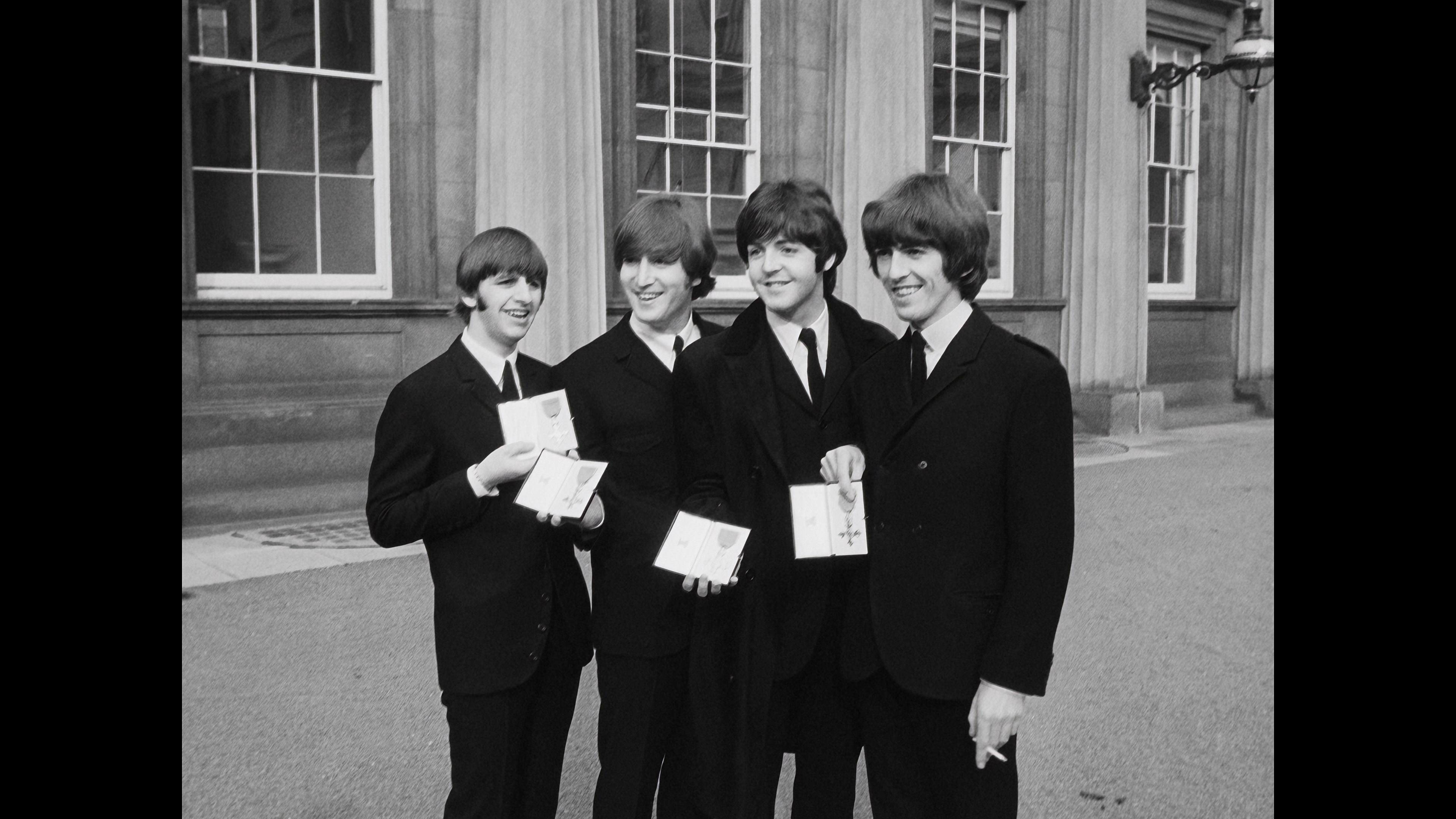
Additionally, it looks as though the documentary footage created in the early-to-mid 90s was indeed shot on film (at a certain point I could even see one of the Arriflex cameras used in production) and those images have evidently been rescanned in high-definition and opened up to fill the 16:9 frame. Remember, this docuseries was made before the advent of widescreen television, but my guess is that producer Neil Aspinall (Let It Be) and directors Geoff Wonfor (The White Room) and Bob Smeaton (Hendrix: Band of Gypsies) were smart enough to think ahead and compose their shots for a potential theatrical release or otherwise. Clips from theatrical Beatles films such as A Hard Day's Night, Help!, and Yellow Submarine also retain their original aspect ratios when included in the doc, and are now presented in full HD resolution, which would not have been the case in 1995. Like I said above, this is all wonderful news for people who care about the technical side of film preservation, but let's get into the contents of The Beatles Anthology itself.
Those who have seen this documentary before know that, across its 11+ hours, it provides an in-depth look at the formation and career of one of the most storied musical groups of the 20th century, as told by the four members themselves-- Paul McCartney, George Harrison, and Ringo Starr (via the aforementioned interviews recorded in the 90s) and John Lennon (via archival footage and audio recorded before his 1980 murder), in addition to key players such as producer George Martin, press officer Derek Taylor, and Aspinall himself, who headed The Beatles' Apple Corps. company after serving as their road manager. We see the ups and downs, interpersonal conflicts and joyful moments, and ultimately (spoiler alert) the permanent breakup of the Fab Four as the 1960s draw to a close. It remains insightful and funny, reflecting the personalities of The Beatles as a group and as individuals, and I consider it a must-watch for both those who already consider themselves fans and for newcomers who want to know what all the hubbub was about those six decades ago.
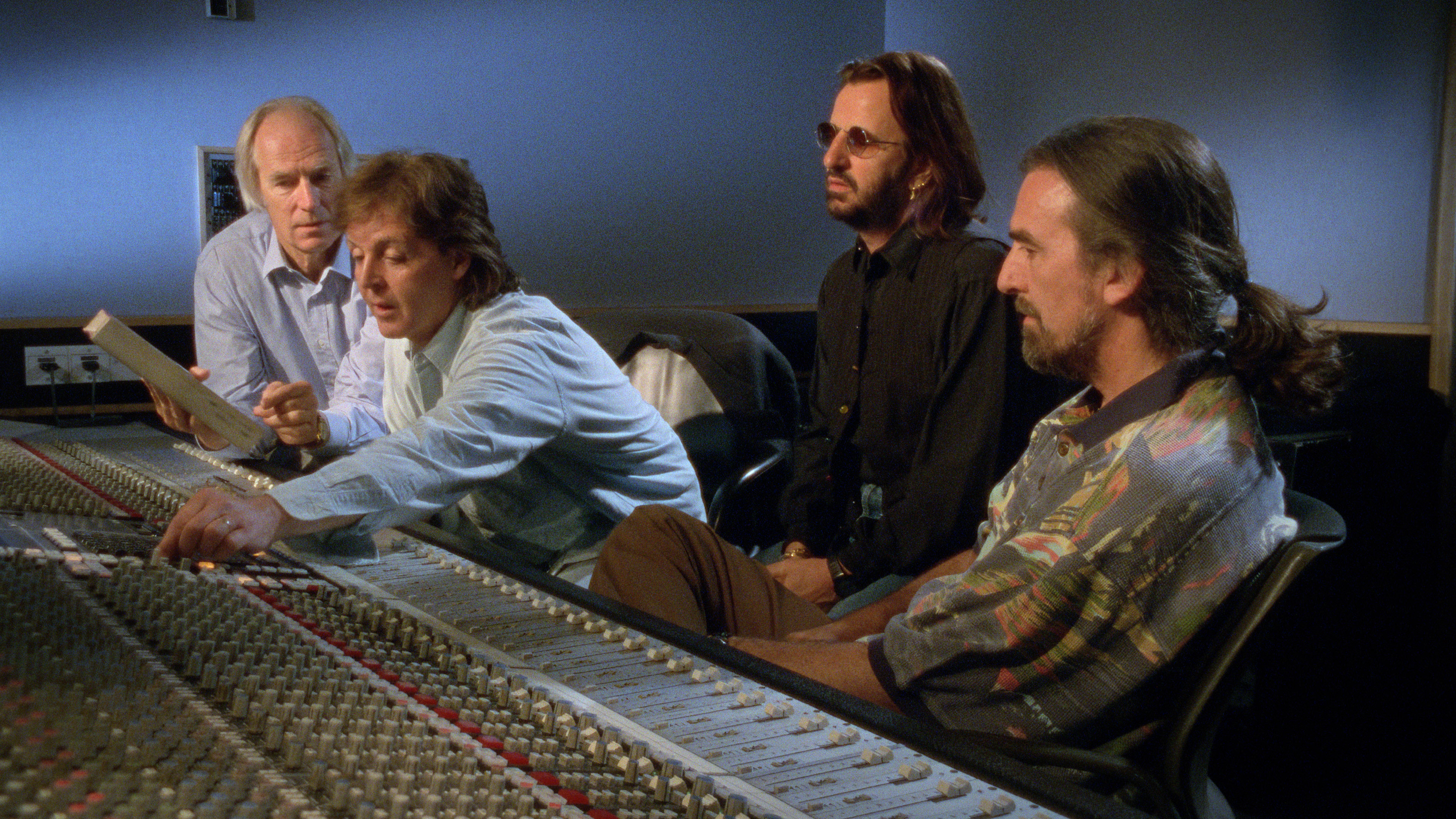
As for the new episode, it is cut together from unused footage of Ringo, George, and Paul when they reunited in the 90s to create... well, The Beatles Anthology. It does feel a little meta to watch a documentary about the making of itself, now included within its own body, but it's also great to see more of this stuff and learn the whys and hows about the project's coming into being with the direct involvement of the band. There's also a good chunk of the new hour spent on the assembly of the two Lennon-penned songs that were released in 1995: "Free As a Bird" and "Real Love," and I got a big kick out of seeing the three remaining Beatles hanging out and jamming together for that time. Another Lennon demo from the 1970s, "Now and Then," is referenced here as a possible third "new" Beatles track, though it would not see completion until 2023... 22 years after Harrison sadly passed away from lung cancer. But one of the most compelling and mesmerizing scenes is just the three surviving Beatles and George Martin sitting at a mixing board and listening to the isolated tracks from "Tomorrow Never Knows" off Revolver.
When Beatles '64 came out I wrote about how the sheer volume of Beatles documentaries has reached the point of self-parody, but upon the still-welcome reissue of The Beatles Anthology I think its worth asking what makes this band so endlessly fascinating and worthy of such intense scrutiny more than 50 years after they went their separate ways. And I believe the answer comes in some of the interviews in the series' first and last episodes, during which Lennon and McCartney talk about how they strived to be among the first of this breed of groups to write their own material, George speaks of how they transformed their rhythm-and-blues influences into something unique, and Ringo comments on how he grew up as an only child but after he joined the band he had three brothers. That formula transformed The Beatles from what could have been a flash-in-the-pan boy band of their era to a collective of creative geniuses who defined a generation, and whose music is still revered and treasured today.
The Beatles Anthology 2025 will be available to stream beginning this Wednesday, November 26th, exclusively via Disney+.