
Sundance Review: "Give Me the Ball" Is a Grand Slam 30 for 30 About the Life of Billie Jean King


Few figures in sports history are as mythologized as Billie Jean King, but ESPN’s latest 30 for 30, Give Me the Ball, cuts through the iconography to reveal the person beneath the legend. Directed by Liz Garbus and Elizabeth Wolff, the documentary premiered at Sundance to an explosive reception—including a standing ovation the instant the credits began to roll, another when the filmmakers took the stage, and a jubilant finale in which King herself lobbed tennis balls deep into the Eccles Theatre. It’s the rare sports doc that captures both the history and the charisma of its subject, and in this case, the results are nothing short of thrilling.
Structured with the Battle of the Sexes as its dramatic apex, Give Me the Ball traces King’s life with the fluidity of a great match—moves, feints, volleys, and all—without ever drifting into a rigid chronological march. The film spends the bulk of its time building to that 1973 showdown, but it never treats the rest of her story as an afterthought. Instead, Garbus and Wolff balance each chapter of her life with equal weight: her childhood torn between traditional expectations and athletic ambition; her early heroes like Althea Gibson (“If you can see it, you can be it”); her marriage to Larry King and their formation of the first women-run tour; the creation of the Virginia Slims Circuit; and the ongoing fight for equal pay, which culminated in the U.S. Open boycott that changed tennis forever.
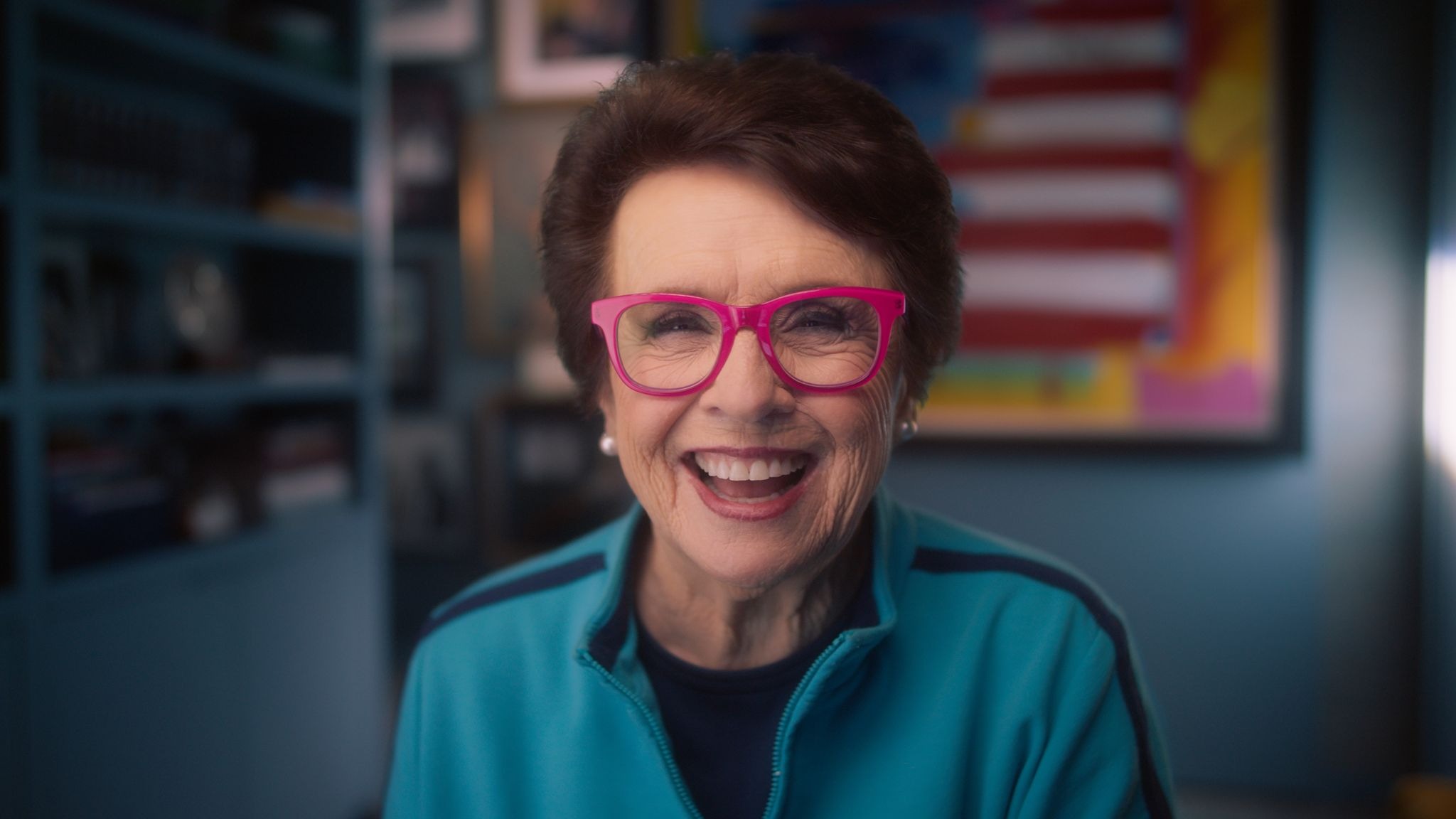
The craft is exceptional throughout. King sits for her interviews looking directly into the camera—pink glasses, full expression, full candor—giving the feeling she’s speaking straight to the viewer. The wealth of archival footage is staggering, and when still photos appear, the film animates them with subtle rainbow prisms or touches of color that echo her identity, past and present. This aesthetic choice is executed with a light hand, adding energy without gimmickry, and the pacing never falters. Whether the film is recounting the formation of the Women’s Sports Foundation or her internal battles with binge eating and her sexuality (addressed directly but respectfully), every sequence feels purposeful.
Perhaps the most impressive achievement is how Give Me the Ball handles the years after the Astrodome. While the Battle of the Sexes is treated as the defining moment of her public career, the final acts of her life—her relationship with Ilana Kloss, the fallout from being forcibly outed in 1981, the collapse of her sponsorships, and her return as a coach and mentor—are given meaningful space. The documentary never presents these chapters as epilogue; instead, they illuminate the resilience that made King more than a champion. The film closes with her back in school completing her degree in history, a perfect echo of her own mantra: “Know your history because that’s how you shape the future.”
Anchored by dynamic interviews with figures like Chris Evert, Rosie Casals, Serena Williams, Julie Heldman, Larry King, and Kloss, and guided by the sure hands of Garbus and Wolff, Give Me the Ball is a top-tier 30 for 30—vibrant, emotional, and steeped in the revolutionary spirit that made Billie Jean King one of the most important athletes of all time. It’s hard to imagine a more fitting tribute or a more exuberant Sundance crowd to receive it.
I give Give Me the Ball 5 out of 5 stars.