
Interview: Directors Alyce Tzue and John Ripa Talk Netflix's 'Steps,' the Cinderella Story Told from the Stepsisters' Side


Netflix's upcoming animated feature Steps takes the classic Cinderella fairy tale and hands the spotlight to the people we've always been told to root against: the stepsisters. From directors Alyce Tzue and John Ripa, the film stars Alli Wong as Lilith, a stepsister so tired of living in Cinderella's shadow that she steals the Fairy Godmother's magic wand, setting off a chain of events that forces her to team up with Cinderella (Amanda Seyfried) to save the kingdom from a villainous usurper voiced by Nikki Glaser. During Annecy 2026, I sat down with Tzue and Ripa to talk about the film's rich roots in fairy tale history, what the voice cast brought to the characters, and why Steps arrives on Netflix at exactly the right moment.
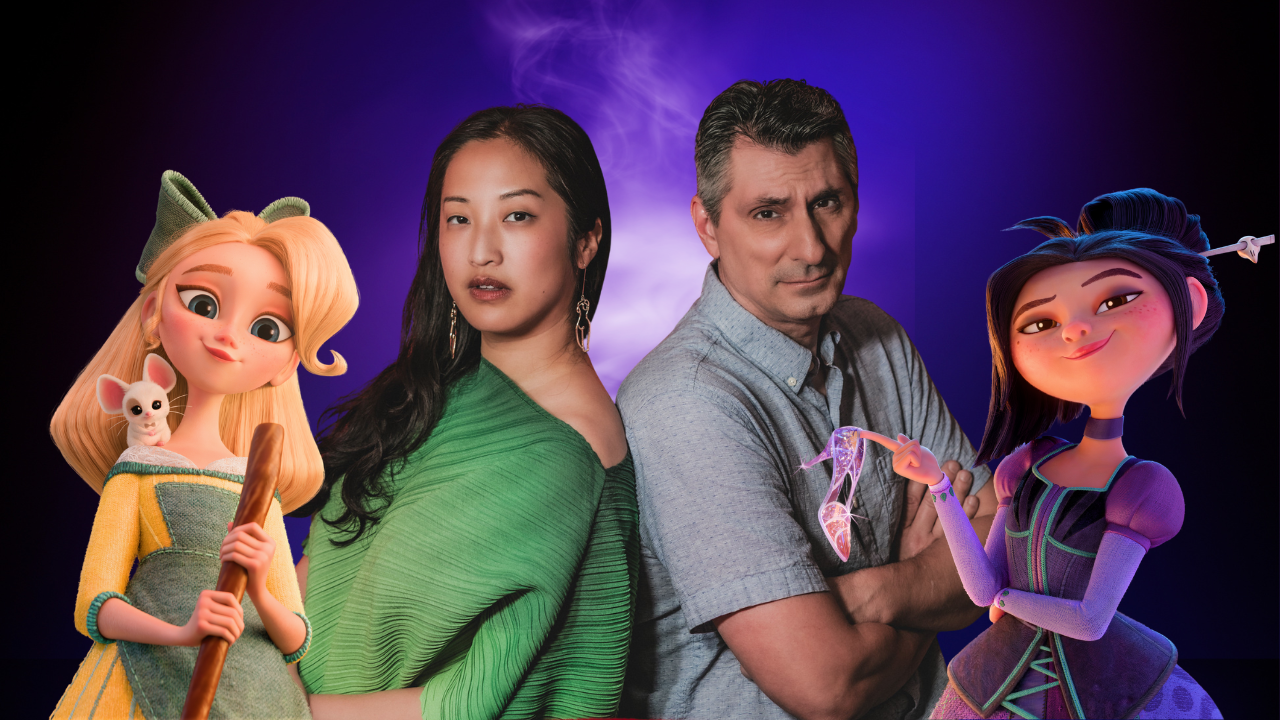
Alex: With so many different versions of the Cinderella story out there, do you remember your first exposure to it?
Alyce Tzue: My very first exposure was actually to the Chinese version, which is thousands of years old; This little orphan girl whose mother comes to life via fishbones. It was quite different. And soon after, of course, there was the exposure to Disney's Cinderella. So it was nice to have exposure to both East and West and understand that there is such a history to the Cinderella story.
John Ripa: For me, obviously, the 1950s Disney version. All the Disney classic animated films were a huge influence on me growing up.
Alex: With that generational and heritage shift in the Cinderella story, have you found room for homages? In the Chinese version, it's a fur slipper; I believe it didn't become glass until Charles Perrault. Have you found ways to honor the story's rich, ancient history?
Alyce Tzue: Absolutely. We were mainly inspired by Cendrillon, the French version, the one that brought the pumpkin carriage and the glass slipper. Our kingdom is French-inspired, with definite roots in Marie Antoinette and Rococo. We did a lot of research, to the extent of things like royal men wearing red-bottomed shoes and women wearing panniers under their skirts, which influenced the design of the skirts. It's great to be at Annecy right now because the film is deeply inspired by French culture.
John Ripa: Part of the fun of having such a rich history to the story is then taking some of these moments — the Fairy Godmother, the dress, the glass carriage — and putting them in the eyes of somebody watching from the outside. They become like an audience member, getting to witness these fairy tale moments with a new lens.
Alex: Speaking of a new lens: when a stepsister becomes a protagonist, that typically shifts Cinderella into villain territory. What seems very different about Steps is that you avoid that path entirely. Can you talk about how you explored making a stepsister a lead without vilifying Cinderella?
Alyce Tzue: One of the philosophies going into this was that we were going to go beyond fairy tale archetypes; Nobody is fully evil, nobody is fully good. One might think we would just make Lilith a fully good character, a fully misunderstood victim. But what's interesting to us is exploring characters, especially women, in a way that's relatable and resonant. That means flawed characters. Both Lilith and Cinderella are flawed and relatable. While on the outside they seem like opposites in terms of background and history, they go on this buddy-comedy, heartfelt journey and find that they are more similar than they are different.
John Ripa: It's really the heart of the film. Something I didn't fully realize until I joined the project is how broad the title Steps actually is. Everybody thinks of Cinderella as the real sister, but she's also a stepsister. The title really encompasses all three of them in a great way, and it allows us to look at these characters in a way that other fairy tale stories really haven't been able to.
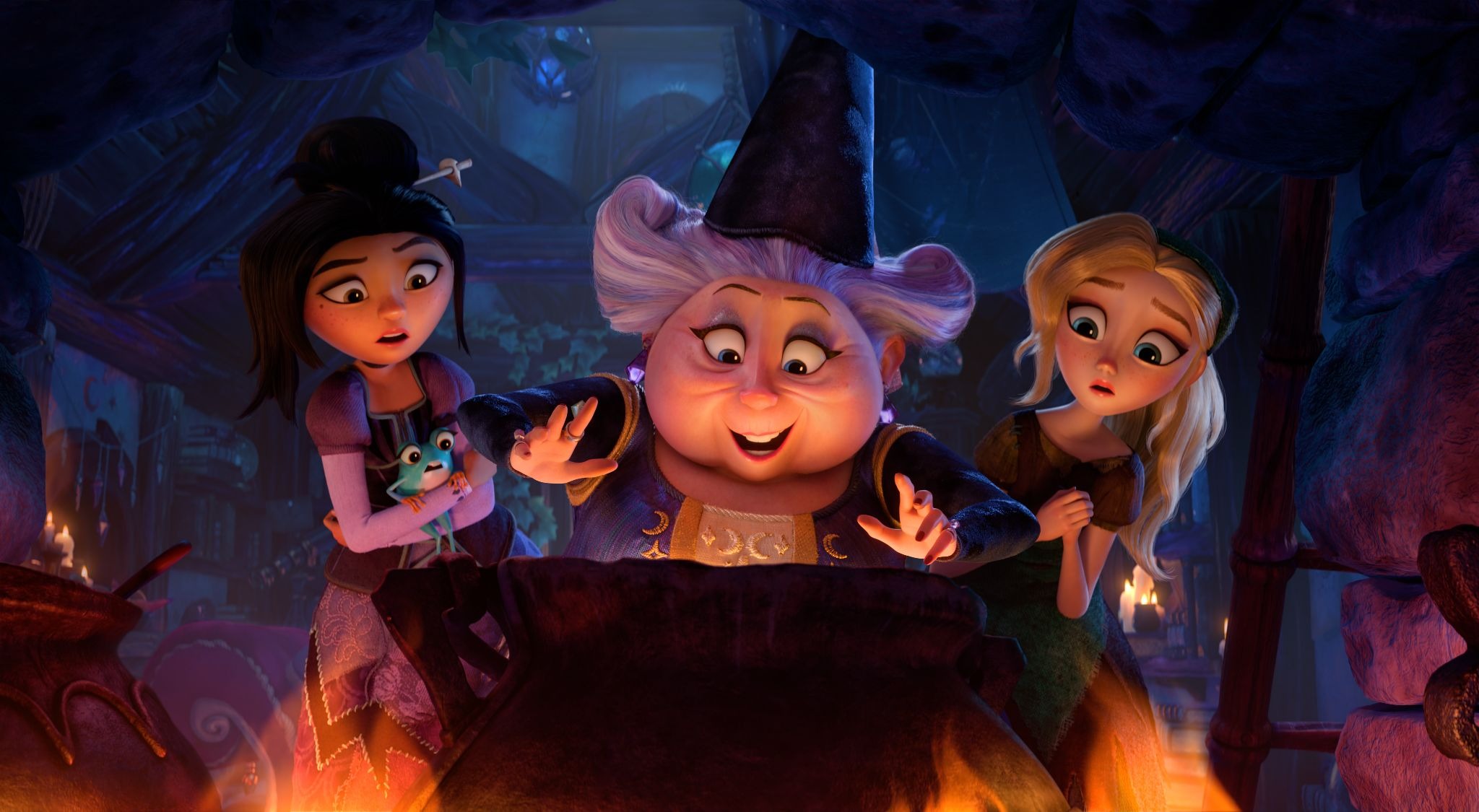
Alex: The voice casting has made a lot of headlines. You've got a legend like Bette Midler joining contemporaries like Amanda Seyfried. Sometimes, when a voice actor gets in the studio, what was designed in the story room becomes something different through their performance. Did any of your voice actors bring something to a character that reshaped what you were planning?
John Ripa: I think they all influenced it. You have Alli Wong and Nikki Glaser, who are incredible comedians. Their inflections, their timing with comedy, their ability to ad-lib all add to it. Bette Midler came in with a very specific take on the voice and how the character would feel. She arrived super prepared; she's a legend. And since the voices are recorded first, the animators pick up on all those little nuances of expression and mannerisms. That's really where the characters come to life.
Alex: In terms of character design, from what I've seen, it skews a little modern while still leaning into that Marie Antoinette Rococo style. What were your touchstones for that? Did you look at contemporary work on Broadway, like Six, which takes a similar era but pop-starifies it?
Alyce Tzue: I definitely remember listening to Six and finding the attitude of it so delicious and awesome. I'd say touchstones like Sofia Coppola's Marie Antoinette, or Joe Wright's Pride & Prejudice; There are a lot of modern period pieces that helped us dig into the visuals. But also books: I've always loved twists on fairy tales. Of course, the classic Ella Enchanted, but also Zel and The Magic Circle by Donna Jo Napoli, very rich fairy tale worlds that were grounded at the same time. That's what we're going for.
John Ripa: Also going to the source. French Rococo architecture, for instance, just looking at the buildings and understanding that it was based on nature, vines, shells, spirals. Always going to the real thing, including fashion design and the history of what would have been worn during the period. You do a lot of research to make an animated film. It's like taking college courses sometimes, but it really helps you make choices and adapt things to work in your world.
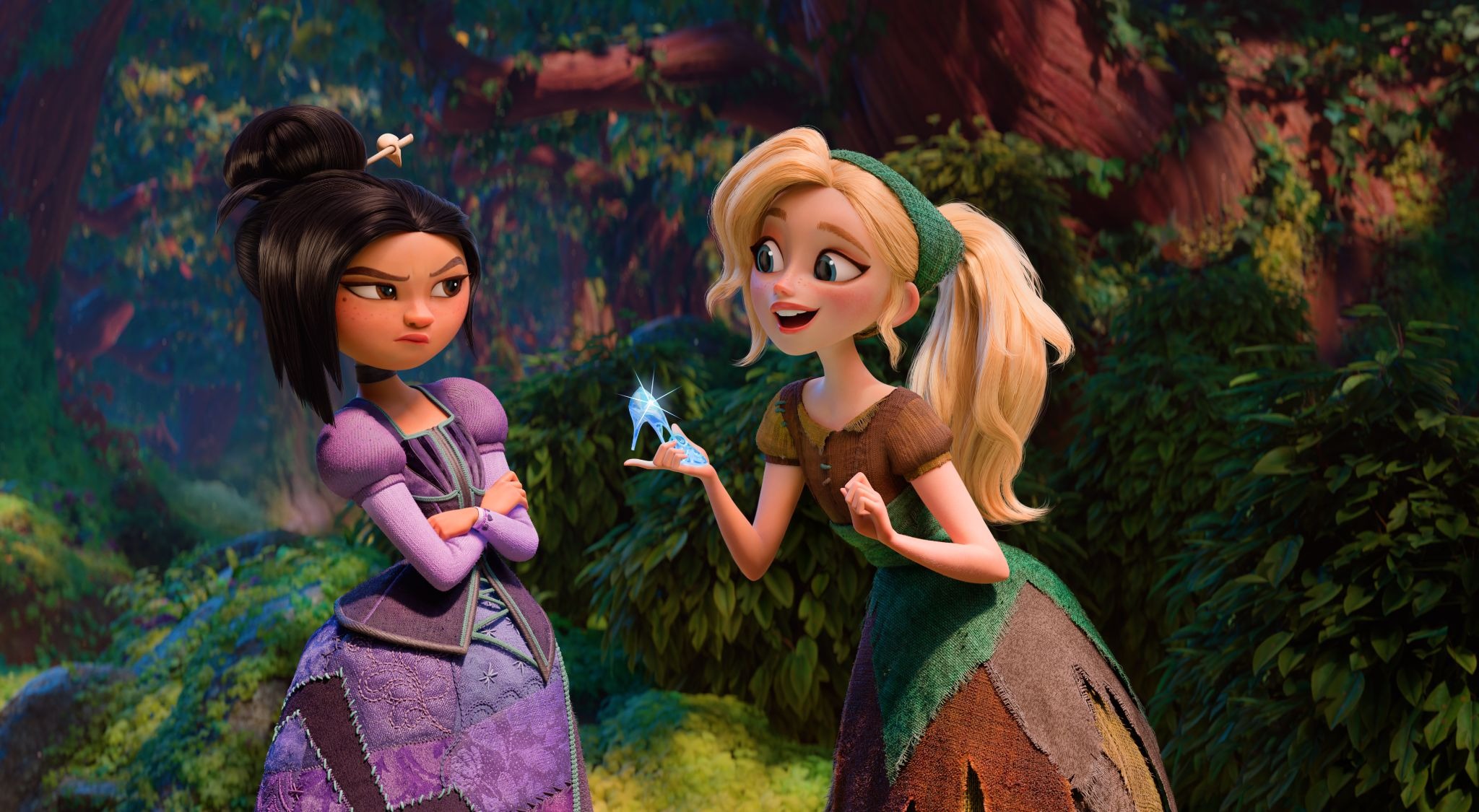
Alex: You have a CG environment where magical things are happening, and elements might be transforming. Was there anything on this project that was a particular technological challenge you hadn't encountered before?
Alyce Tzue: We wanted everything in the world to feel tactile, really lean into 3D textures to make them feel rich and delectable, like you want to reach through the screen and touch it. Magic was one of those elements. As opposed to something like laser beams, we wanted the magic to feel physical, like glitter. But then, how do you make glitter disappear in a believable way? How do you make it surround something and then transform into something else? Our effects, compositing, and lighting teams all collaborated and tackled that challenge with such gusto. We're really excited and grateful.
Alex: The color palette looks really special. Is there any color theory at work — colors that represent themes people should watch for?
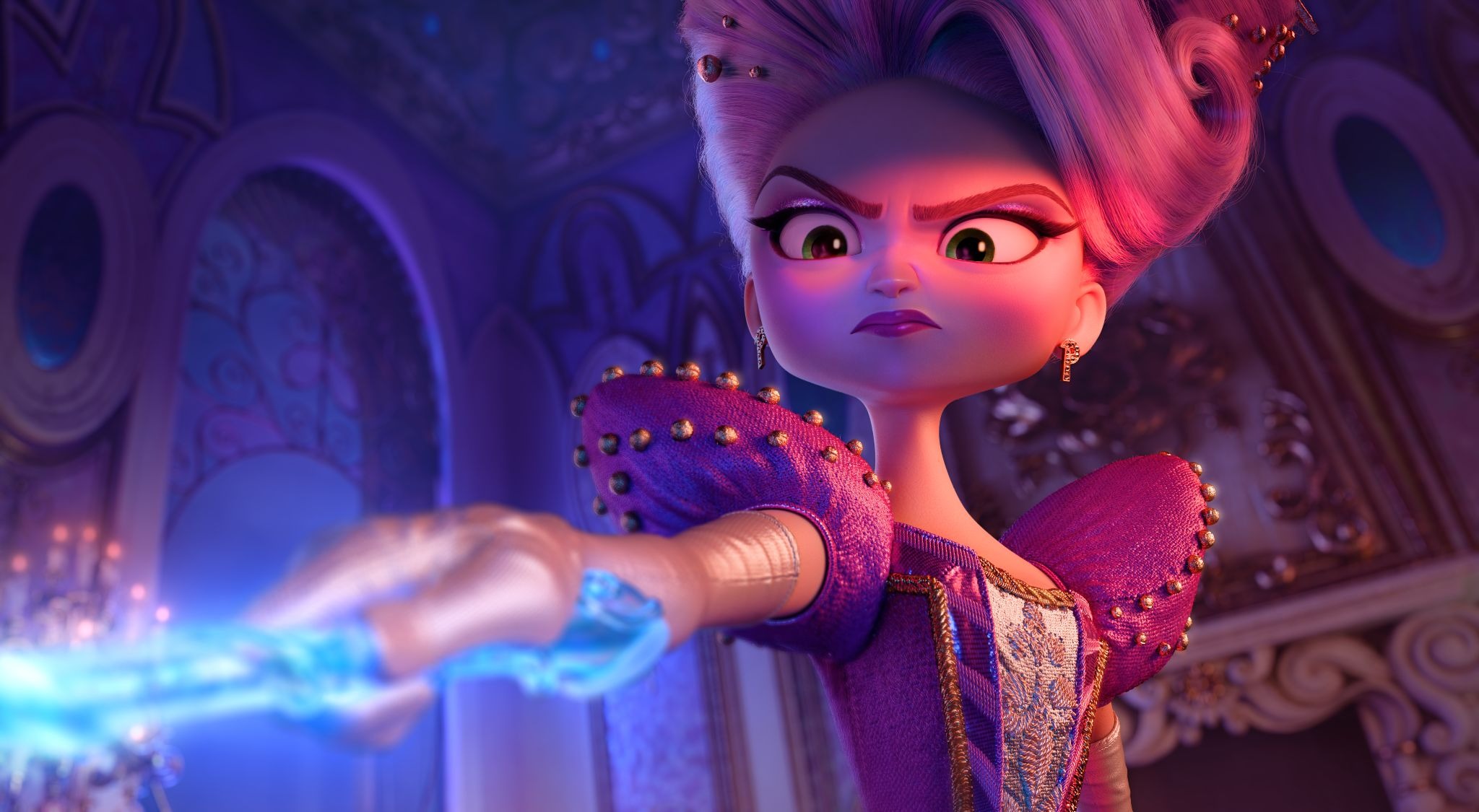
Alyce Tzue: There are colors that represent characters. Lilith lives in purples; Margot loves frogs, so she lives in green; and Priscilla, our Marie Antoinette meets Paris Hilton, lives in hot pink.
John Ripa: The king and queen, who people really haven't seen yet, embody golds and ivories. You try to find colors that speak to the characters. And then in terms of art direction, you look at each sequence to see what the influence is and who's driving it.
Alyce Tzue: In terms of themes specifically, there are kind of two parts of the film. When you're in the kingdom, that represents conformity, people following the rules, so you'll find pastel colors there. Once you break the Cinderella story and head out into the wilderness, you're in forests, and you have deep earthy tones: greens, browns, dark reds. That's something to watch out for.
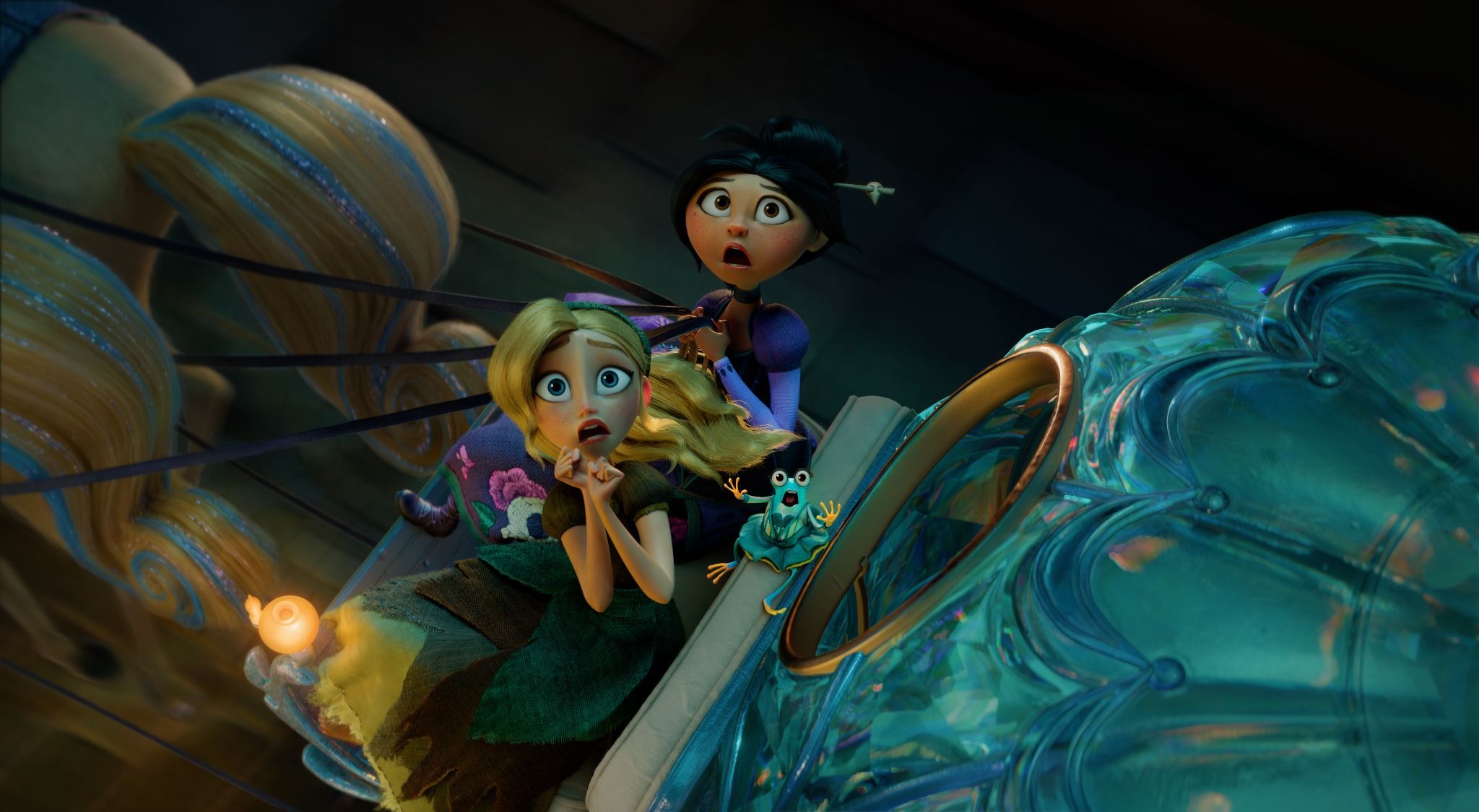
Alex: Speaking of the forest and breaking the Cinderella story — the Cinderella most people know doesn't include biker trolls or other creatures. What was it like to redefine the fairy tale world the story fits within?
John Ripa: That was really fun, and one of the things we were most looking forward to. Because we were breaking the story, we got to play within the traditions of Cinderella — the things people expect to see — but from a different point of view, while also adding to it in a cool way. One thing you always do, though, is think about new characters and situations in terms of how they push on the characters' arc and relationship. It always comes back to the characters.
Alex: Tonally, the film looks very funny and wild, but you've also mentioned the heartfelt center. During Brad Bird’s Netflix conversation, he said that tonal shifts are easier in animation than in live action because of the medium's broad nature. Did you find that to be true here?
John Ripa: It's interesting, I never quite thought about it that way. I think when your characters are true to themselves, the tonal range comes naturally. As people, we all have moods, we all have tonal shifts. When I get nervous, my quirky sense of humor comes out. But I can also speak to something and feel emotions and well up. If you ground your characters' emotions, you understand when they're pushed and why the humor comes out — she's stressed, she's having to deal with something, and the comedy is a release. If it's grounded and real, you can weave in and out of all the emotions we all feel.
Alex: The film is arriving around the holidays, a time when a lot of families will be watching together. What are you most looking forward to about the release?
John Ripa: We can say this now since it's been officially announced: the film comes out at 12:01 a.m. — just after midnight — on November 20th. Midnight is such a Cinderella fairy tale moment, so that has a really nice connection.
Alyce Tzue: I'm especially excited about the message that hopefully will reach families, adults and children alike. It's so important to extend a hand to those who feel overlooked or like they don't belong. This is ultimately a story about empathy and about everyone deserving their happily ever after. If we can inspire even one person to stand up for someone else and include someone else, we will have done a great job.
John Ripa: That's the most important thing, to be able to affect people's lives in a positive way and get them thinking about the people around them. If you can do that, you've accomplished something amazing.
Something amazing is coming just after midnight on November 20th when Steps arrives exclusively on Netflix.